Rigid Box Lid Fit: How to Specify Clearance, Overlap and Closure
By Triya Gift Packaging Team · Published and updated October 30, 2026 · Buyer specification guide
Specify rigid box lid fit using finished mating dimensions, lid overlap and the fully loaded closure position. Approve the actual wrapped box, because a board drawing alone cannot establish the finished fit. Compare empty and loaded samples, check each permitted lid orientation, and record sticking, rocking and contact marks. Agree project-specific limits with the supplier rather than applying a universal clearance to every box.
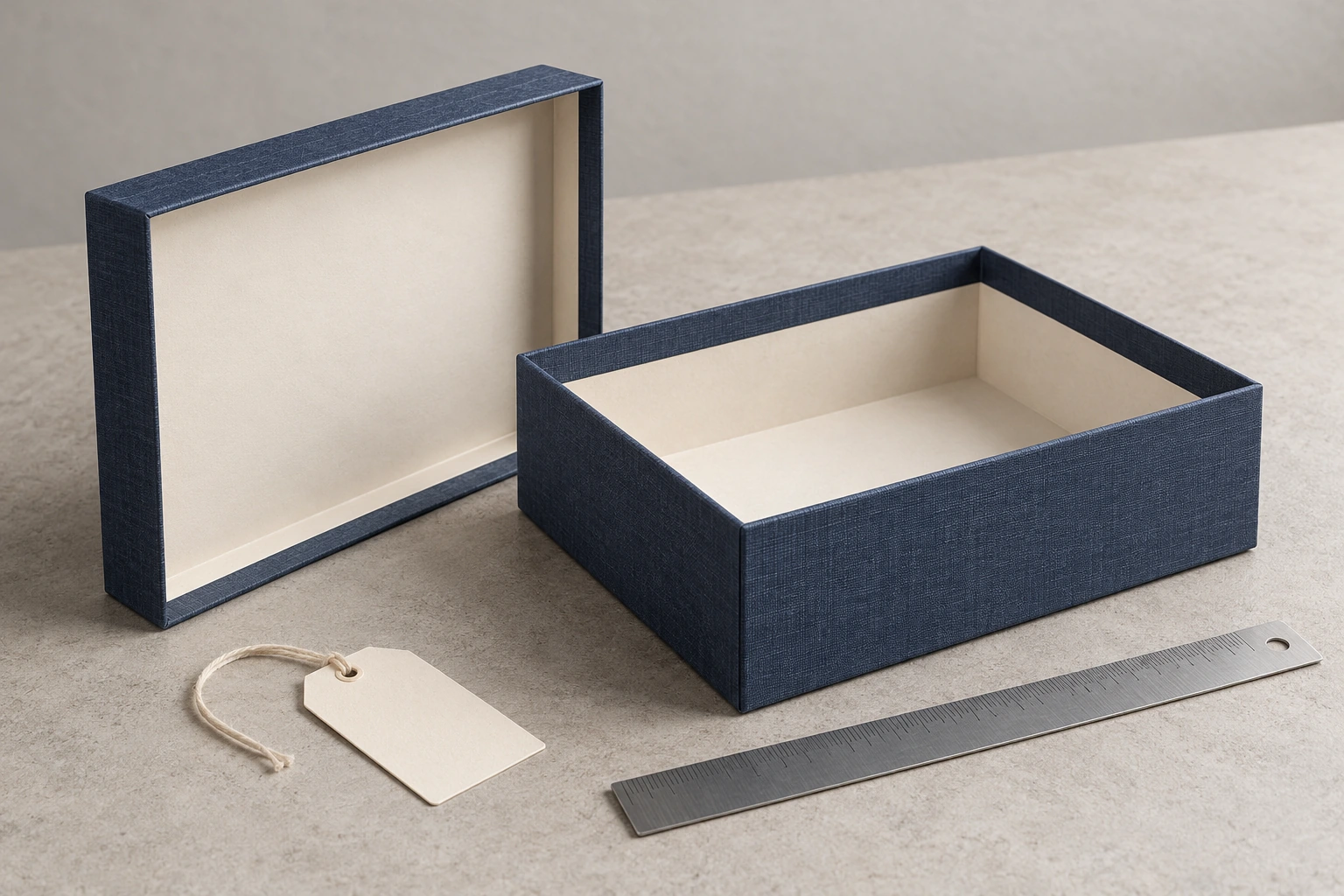
An attractive box that needs a struggle to open creates a different impression from the one shown in its rendering. At the other extreme, a lid that rocks visibly or comes away during ordinary handling may undermine the intended presentation. The useful purchasing question is: what should this lid do on this finished, filled box?
Applies to: secondary paper-wrapped rigid presentation boxes with removable lids, including conventional lid-and-base and shoulder-and-neck structures. This guide does not specify an airtight seal, child-resistant closure, food-contact construction or validated shipping performance. Images illustrate design directions; they are not customer test records.
A separate lid does not describe the whole structure
In a February 2026 Reddit packaging-design discussion, a student looking for a two-part cosmetics box received a useful request: distinguish internal from external dimensions and identify the lid, base, shoulder and exposed reveal. That exchange points to a practical briefing problem: a photograph and an overall size leave the fitting interface undefined. It is a qualitative discussion, not evidence of defect frequency or market demand.
Two common constructions need different drawings:
- Lid-and-base: the removable lid slides around the outside of the base. Identify how far it overlaps the base and how much base remains available to grip.
- Shoulder-and-neck: the lid engages a projecting inner neck or collar. Identify the mating neck, lid seating surface and intended visible reveal when closed. The outer lid and base can appear aligned while the fitting interface sits inside.
Google's Plastic-Free Packaging Design Guide 2.0, page 75 describes telescoping formats and notes that large footprints can hinder one-handed opening, while deeper boxes can open slowly with lightweight contents. Treat opening feel as a design choice to verify on your product, rather than assuming a slower release always signals higher quality.
Write the fit brief around mating surfaces
For a conventional telescoping box, distinguish the finished inside span of the lid from the finished outside span of the base at the same engagement height. For a shoulder box, use the corresponding lid-to-neck interface. Product cavity dimensions answer a different question: whether the contents fit inside.
Use a common orientation and unit throughout the drawing. Identify where each measurement is taken, particularly when paper overlaps, corner wraps or a collar interrupt an otherwise flat surface. A dimension taken at the top opening is not automatically representative of the whole depth.
| Specify | What the supplier needs | What the buyer checks |
|---|---|---|
| Finished mating spans | Lid inside and base or neck outside, in both plan directions, with measurement locations | The same interface and orientation appear on drawing and sample record |
| Clearance convention | Whether the stated difference is total across a dimension or a nominal allowance per side | Two reviewers cannot interpret the same value differently |
| Lid overlap | Engagement depth and any exposed base needed for holding | The recipient can grip the intended area and lift the lid |
| Closed position | Seating surface, intended reveal and alignment of visible panels | The lid seats consistently without bearing on the contents |
| Material build | Board, wrap, lining and finish references for both mating parts | Sample components represent the intended finished construction |
| Packed height | Insert, actual products, cards, tissue and any other included layers | The tallest loaded point does not obstruct closure |
Clearance arithmetic, without a made-up tolerance: the total dimensional difference is the finished lid inside span minus the corresponding finished mating outside span. Dividing that difference by two describes nominal equal spacing only when the parts are centered and suitably shaped. It does not prove that each real side has that gap. Do not turn this relationship into a universal millimetre recommendation.
Ask the converter how they measure soft or wrapped surfaces without compressing them. Agree measurement locations, equipment and contact method. Record individual observations rather than reporting only an average that conceals a tight corner. Our GSM and paperboard thickness guide helps separate material weight from the thickness used in a structural brief.
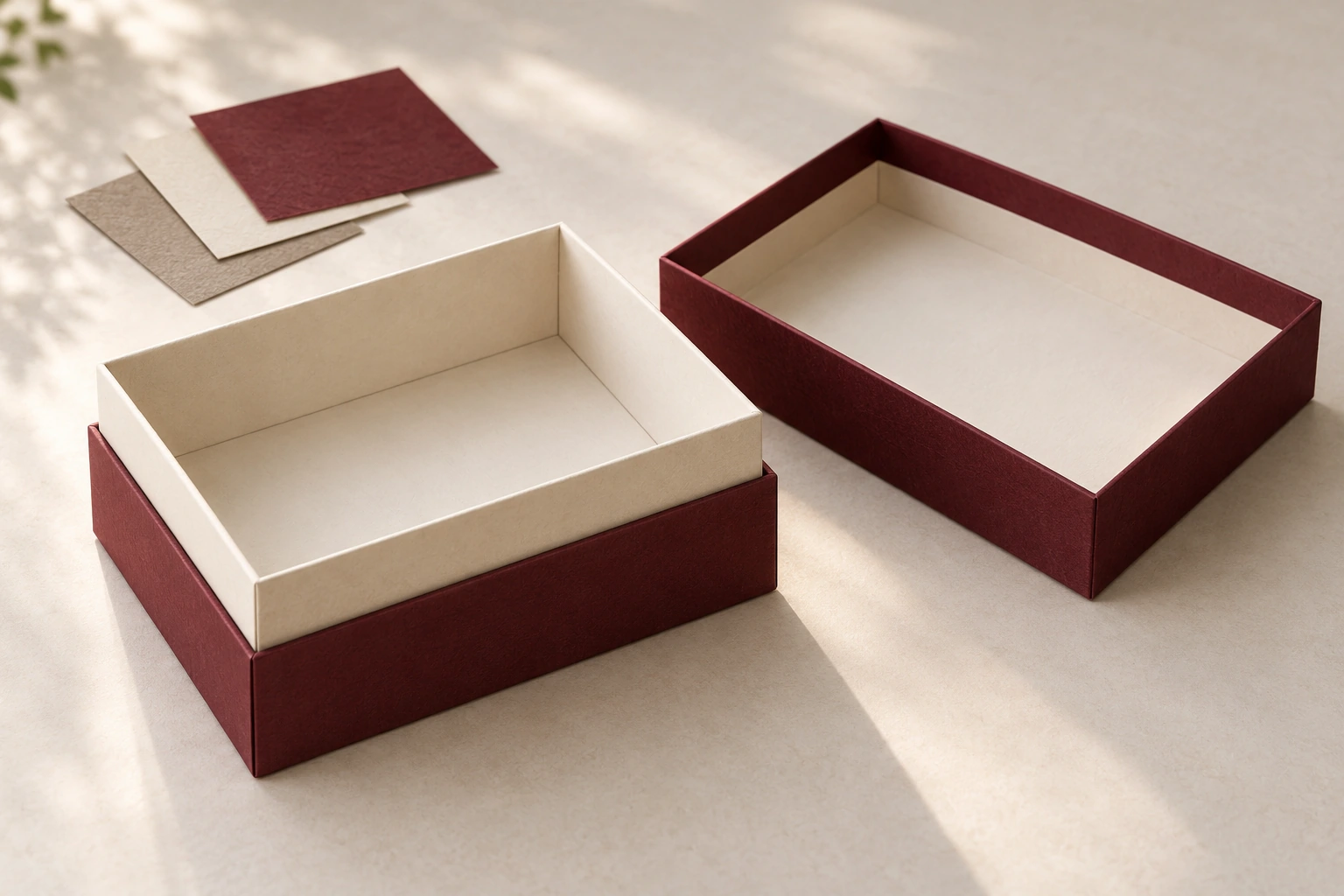
Use the symptom to narrow the next check
Change one candidate feature at a time during development. An empty-versus-loaded comparison often provides a more useful first step than immediately enlarging the lid.
The empty box already sticks
Identify where engagement begins to resist. Look for unequal mating spans, local wrap build, a raised seam, corner distortion or visible surface contact. Record the location and compare it with the drawing. Do not force the lid and then approve the damaged sample as representative.
It closes empty but stops when filled
Check actual product height, insert seating, folded tissue, cards and accessories. Photograph the highest loaded point and the lid's intended seating surface. Increasing lateral clearance may leave the vertical obstruction unresolved.
The lid rocks or the reveal varies
Compare squareness, seating surfaces and the assembled collar where present. Check permitted orientations and whether a component is sitting unevenly. Record which side changes rather than describing the whole box as simply loose.
Opening changes after handling or storage
Retain the original sample and record the later condition, storage duration and available temperature/humidity history. Review the actual construction with the supplier before assigning a cause. A before/after observation alone does not establish a humidity tolerance or transport rating.
A label, seal, belly band or added wrap can also alter the opening sequence. If one crosses the lid-to-base joint, include it in the review and define how the recipient removes it. Google discusses adhesive deadening for certain closure labels on page 44 of the same guide; the broader purchasing lesson is to check that closure components do not leave unintended adhesive at a moving interface. Request your supplier's applicable construction rather than copying another design's dimensions.
For packages with a sleeve, check the paper sleeve sizing guide. Surface rubbing belongs in the separate finish and packing review. These issues can interact with fit, but they need their own acceptance records.
Create a paired empty-and-loaded approval record
This is a proposed development method, not Triya Gift laboratory data. Before reviewing samples, agree the sample quantity, selection method, opening repetitions and conditions with the supplier. Record what was actually reviewed; a favorable prototype does not establish a production defect rate.
- Identify each pair. Label the lid and its base with sample IDs, drawing revision, construction references and review date. Record whether the production system requires matched pairs or interchangeable parts; do not assume either.
- Review empty engagement. Use the intended orientation and lifting action on a supported surface. Observe where contact begins, whether seating is even and whether opening marks appear. Keep photographs of all sides in the closed position.
- Repeat with the complete gift assortment. Use production-intent products and every intended packing layer. Record contents and packed mass, then compare seating and opening with the empty result. Support the base; do not suspend fragile contents by the lid.
- Check variation intentionally. Review allowed lid orientations. If interchangeability is required, agree and document a cross-pairing plan. A single specially matched prototype cannot establish that randomly selected production lids and bases will fit.
- Resolve the decision. Record accept/revise, each observation, any dimensional finding, photo IDs, reviewer and the supplier's response. Retain an identified finished reference, with the loaded configuration documented, before production approval.
If a project needs quantified opening force or release time, agree a fixture, direction, speed, starting position, conditioning, repetitions and endpoint with a competent test provider. A handheld video demonstrates an experience under its recorded conditions; it does not establish an objective universal performance grade.
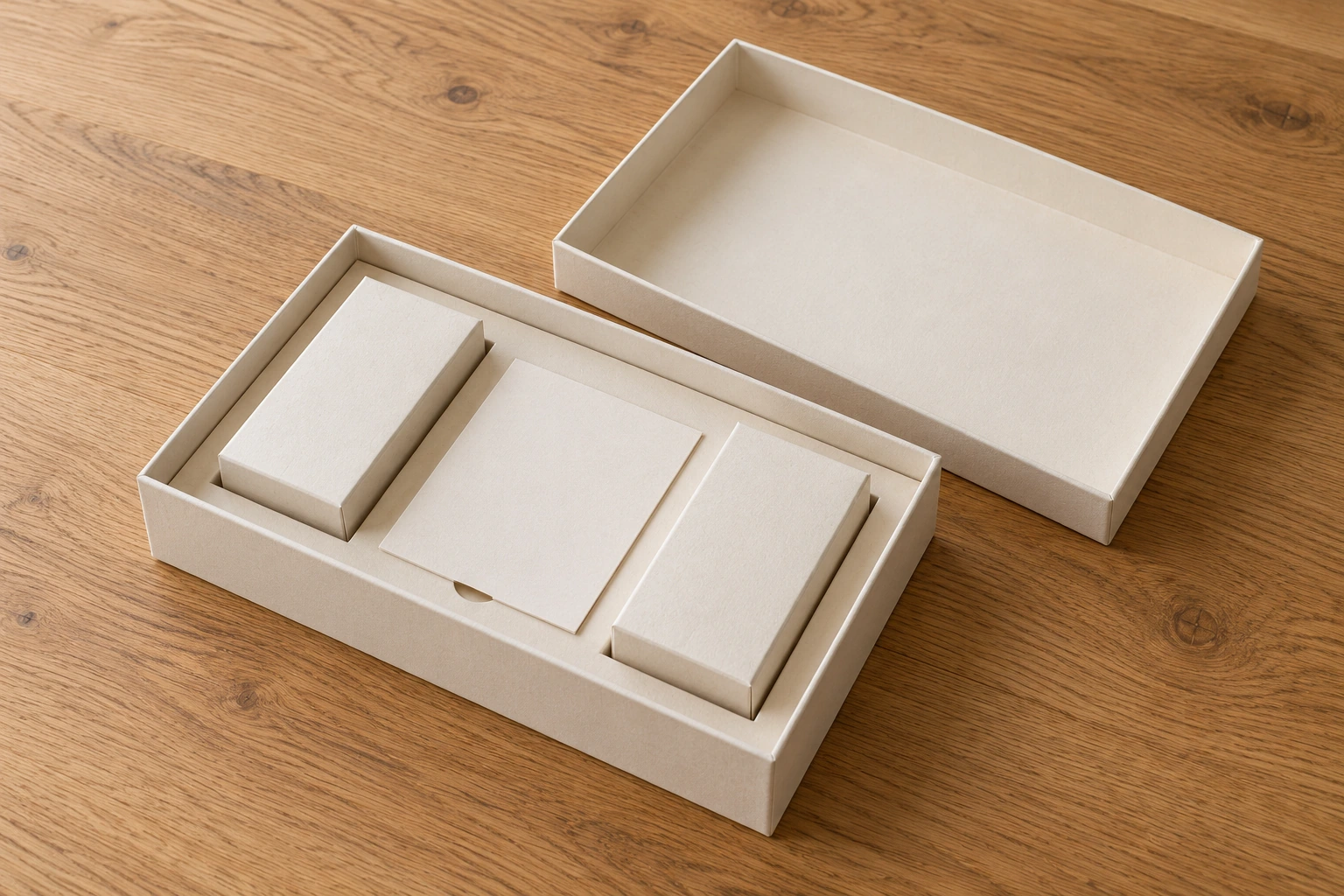
Keep the reference linked to the production revision
Changes to board, wrap, lining, finish, dimensions, collar or packing layers should trigger a review of the affected fit. Keep the signed drawing, material references and approved sample together. For batch inspection, translate agreed findings into the gift box defect classification checklist; separately define sampling and acceptance arrangements for the order.
Fit is one approval decision. Review product restraint, the outer shipper and route hazards separately using the shipping protection guide. A snug decorative lid does not demonstrate that a gift box can travel safely without an appropriate shipping pack.
Buyer questions about rigid box lid fit
What clearance should I specify for a rigid box lid?
Request a project-specific finished dimension and tolerance proposal from the supplier. Identify the interface, material build and measurement convention, then approve production-representative samples. This guide provides no universal clearance value.
Should a premium lid open slowly?
Only if that behavior suits the product and recipient. Review grip, box depth, packed mass and the complete opening sequence. Slow release by itself does not establish quality, protection or an airtight seal.
Can I use the same drawing for a shoulder box and a lid-and-base box?
They need their own structural details. A shoulder box must identify the neck, seating surface and any intended reveal; an ordinary telescoping lid engages the base differently. Discuss the actual construction with the converter.
Can a digital mock-up approve lid fit?
It can communicate shape, artwork and the intended reveal. Approve fit on a finished physical sample with the actual contents and packing layers. A flat unwrapped prototype leaves relevant material interfaces unrepresented.
Is a tight lid enough to keep the box closed in delivery?
Do not rely on that alone. Agree the presentation closure, restraint and outer shipping construction, then select appropriate validation for the route. Retail opening and delivery protection are separate requirements.
Ask Triya Gift for a defined lid-fit sample
Explore our lid-and-base rigid boxes for a conventional lift-off reveal, or shoulder-and-neck boxes when an inner collar and deliberate reveal suit the design. For another opening direction, compare sliding drawer boxes.
Send the product dimensions and packed mass, proposed box size, quantity, complete assortment, preferred lid overlap, desired reveal, artwork and delivery destination. Include photographs or a physical reference showing the opening behavior you want. Ask for a finished dimension proposal, sample scope and fit-approval record with the quotation.
Request a rigid gift box and lid-fit sample · Explore Triya Gift packaging