A Reddit discussion about scratched matte-black print includes conflicting suggestions about soft-touch and anti-scuff finishes. It concerns cards, not a controlled box test, but exposes a relevant buying problem: a finish name does not define the result. Treat that discussion as a question to investigate, not proof that one material always performs better.
DECISION ONE
Describe the mark before changing the finish.
Use working descriptions your supplier can reproduce. A scuff is a rubbed area with an unwanted visible change. A scratch is a more localized line or groove. Ink transfer leaves color on the contacting material. A fingerprint may be a handling residue rather than abrasion. Record the observation first; these descriptions alone do not diagnose the cause.
On a dark presentation surface, differences in gloss or exposed lighter layers can be visually distracting. Examine the lid, corners, opening edge and hidden panels separately. A faint mark beneath an insert and a mark across a brand name need not have the same acceptance threshold.
| Requested effect | What the term tells you | What still needs evidence |
|---|---|---|
| Matte finish | Low-gloss visual direction | Exact coating or film and its behavior when rubbed |
| Soft-touch finish | A tactile direction | Product reference, marks after handling and finish compatibility |
| Anti-scuff film | A claimed performance intention | Named film, substrate, test conditions and agreed endpoint |
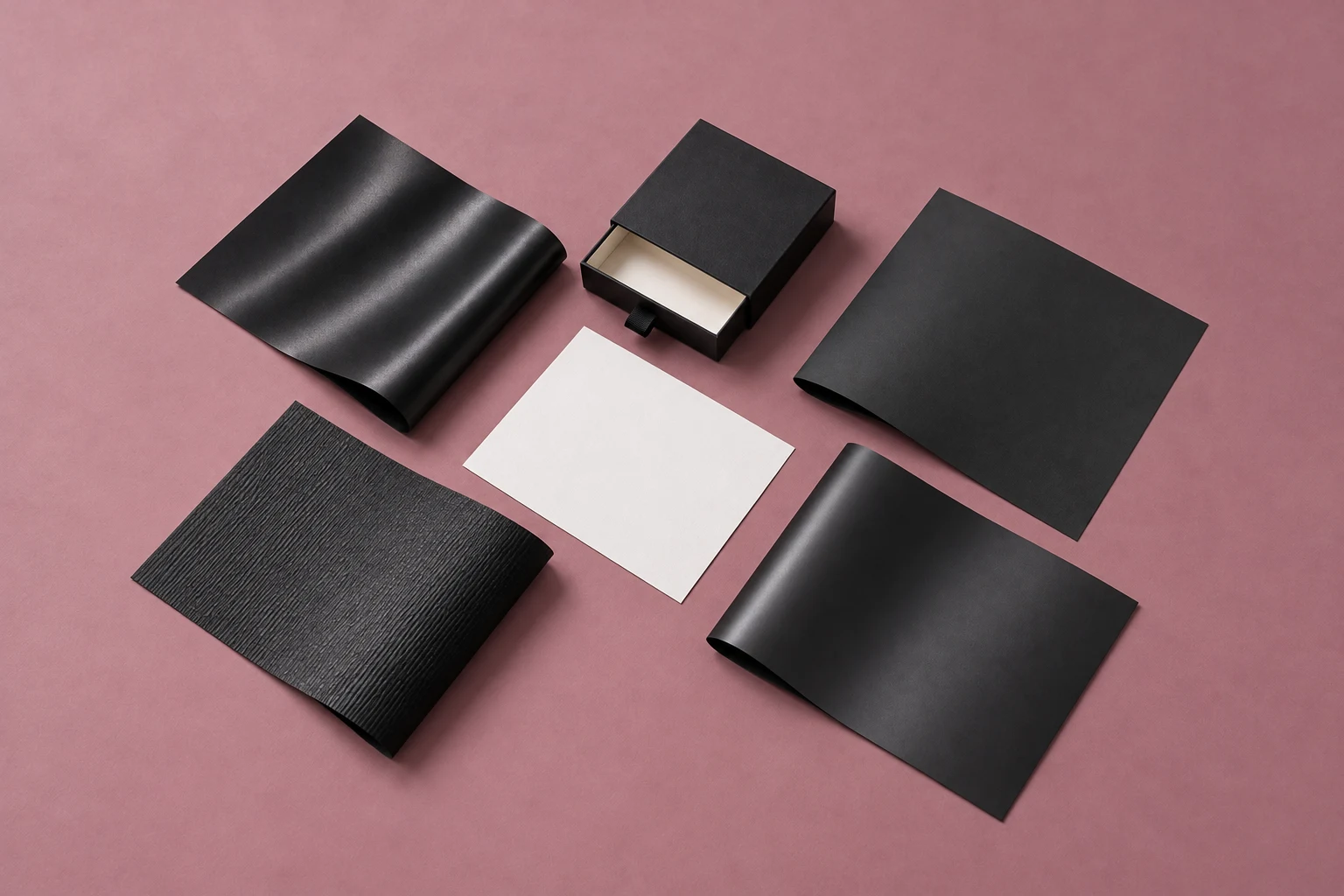
| Dark-colored wrap paper | An alternative paper/color construction | Texture, edge appearance, transfer, foil compatibility and abrasion behavior |
| Protective sleeve or separator | A way to change surface contact | Actual contact material, fit and pack-out trial results |
Keep the paper, ink system, film or coating reference, decorative process order and approved sample revision together. Changing one layer means the old result may no longer describe the new construction. For decorative registration and relief, use the separate foil, emboss and spot-UV approval guide.
DECISION TWO
Ask what was tested—not only whether it passed.
ASTM D5264 describes laboratory comparison of abrasion resistance for printed materials using a Sutherland rub tester or equivalent. Its published scope concerns graphics on flat substrates. That makes it a reference to discuss with a qualified laboratory; it is not, by itself, a certification of an assembled gift box or an entire delivery route.
Ask the laboratory to select and document an appropriate method and edition, sample preparation, contact material, loading, motion or cycle settings, conditioning and assessment endpoint. Agree these before comparing results. A hand-rub demonstration can help identify a concern, but it must not be presented as a standardized test.
A report should let you identify the result
- Box SKU, paper/ink/finish references and production or sample revision.
- Test provider, method and edition; any deviation or limitation.
- Contact material, load, motion, exposure duration or cycle count and conditioning.
- Sample count and individual observations, not only a favorable photograph.
- Before/after images under consistent lighting and viewing angles.
- Pre-agreed appearance threshold, result, reviewer and date.
These are proposed record fields, not Triya Gift measurements. There is no universal cycle count or acceptable scratch length in this guide. Request the applicable procedure and agree the threshold for the actual product and channel. Do not convert a laboratory comparison into a promised percentage reduction in delivery damage.
Two checks answer different questions.
Flat sample: how do the candidate surface systems compare under controlled contact?
Assembled pack: where does the real box touch, slide, flex or move during packing and delivery?
Keep both records. A favorable flat-sheet result does not examine a drawer edge, corner wrap or an improperly fitted sleeve.
DECISION THREE
Remove avoidable rubbing from the packing route.
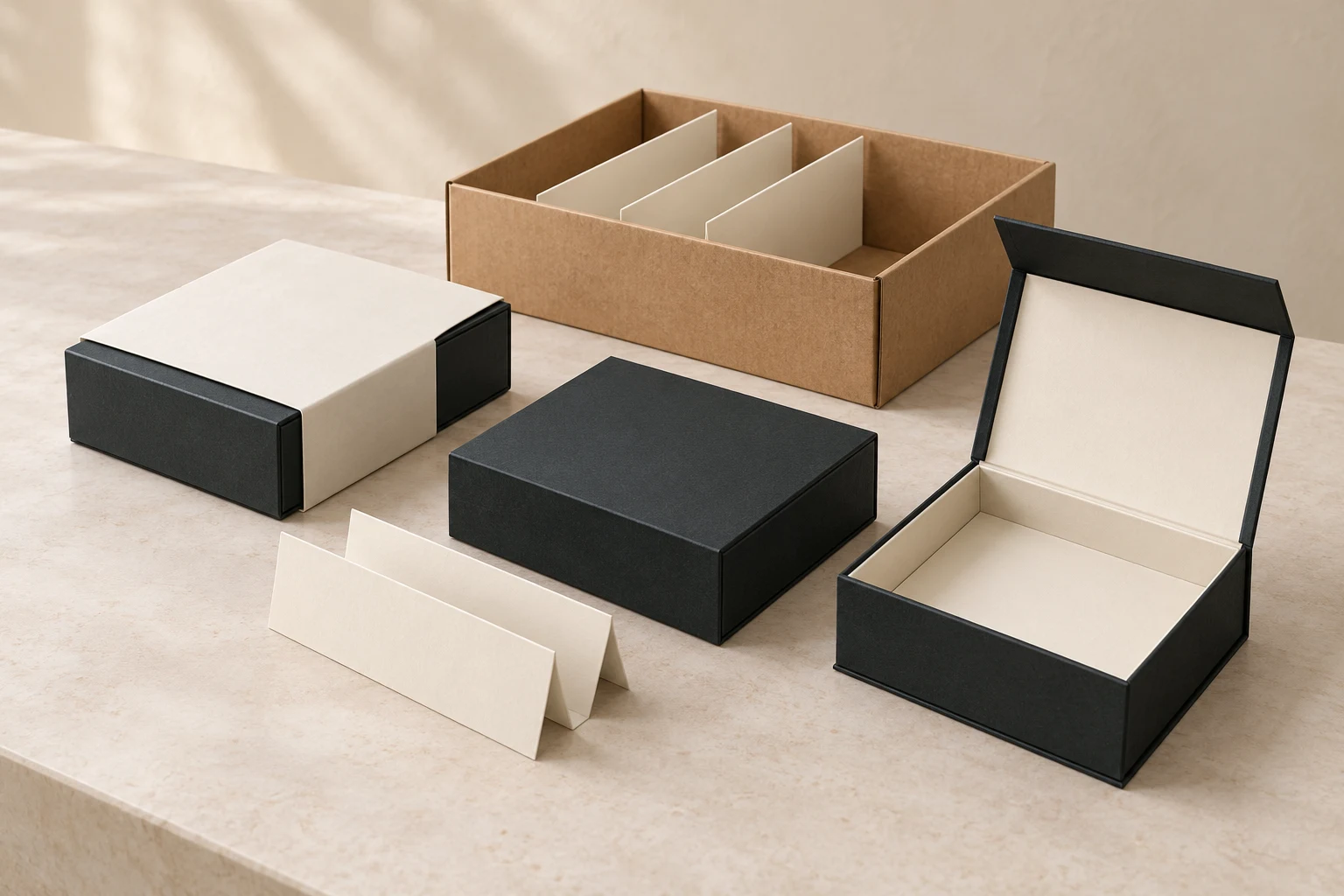
Follow one box from assembly to the buyer's opening. For a drawer box, review tray-to-sleeve contact and the pull area. For a magnetic rigid box, inspect the lid and flap contact zones. For a shoulder-and-neck box, examine the neck-to-lid interface rather than assuming extra tightness improves protection.
- Map contact points. List benches, other boxes, inserts, sleeves, dividers and outer cartons that touch the decorative surface.
- Control handling. Keep work surfaces clean; lift finished boxes instead of dragging them. Investigate loose particles when marks appear.
- Trial separators. Use the proposed material, not a substitute selected only for the demonstration. Check texture, seams, print transfer and whether it stays in position.
- Review restraint. Check whether boxes can slide against one another or the shipper. Avoid solving movement by compressing the presentation box until it deforms.
- Inspect after a defined pack-out trial. Record the handling sequence, carton arrangement, materials, observations and photographs. For route performance, arrange suitable distribution testing separately.
Change one candidate variable at a time during screening so you can interpret the result. Compare an untouched retained sample with the handled sample under the same light, distance and angles. Capture both the whole panel and the mark. Do not silently polish or wipe away a finding before recording it; any cleaning procedure should be separately agreed and documented.
For production, translate the accepted appearance into your defect catalogue. Keep batch inspection distinct from finish selection, and review the shipping protection guide for risks beyond cosmetic rubbing.
Buyer FAQ
Does soft-touch mean scratch-resistant?
No. A tactile description does not establish abrasion performance. Confirm the exact finish and compare evidence for the intended construction.
Should every black gift box have anti-scuff lamination?
Not automatically. Compare the desired appearance, finish compatibility, contact conditions and verified sample performance. A separator or pack-out change may also need consideration.
Can tissue paper guarantee protection?
No. The actual sheet, folds, fit, movement and handling matter. Include it in the pack-out trial instead of relying on the material name.
Is a rub-test pass enough to approve shipping?
No. It addresses the reported test scope. Assess the assembled packaging and route-specific transport risks separately.
BUILD A SURFACE-PROTECTION BRIEF
Quote the finish and its packing plan together.
Send Triya Gift your box style, size, quantity, artwork and finish reference. Add photographs of any existing marks, the proposed separators, sales channel and delivery destination. Request identified finish options, production-representative samples and a documented protection plan; confirm testing availability and cost separately.
Discuss a dark gift box project