BUYER QUALITY DESK / OCTOBER 9, 2026
Define the defect.
Then decide the lot.
A custom gift box QC checklist for bulk-order inspection—not just sample approval.
Direct answer
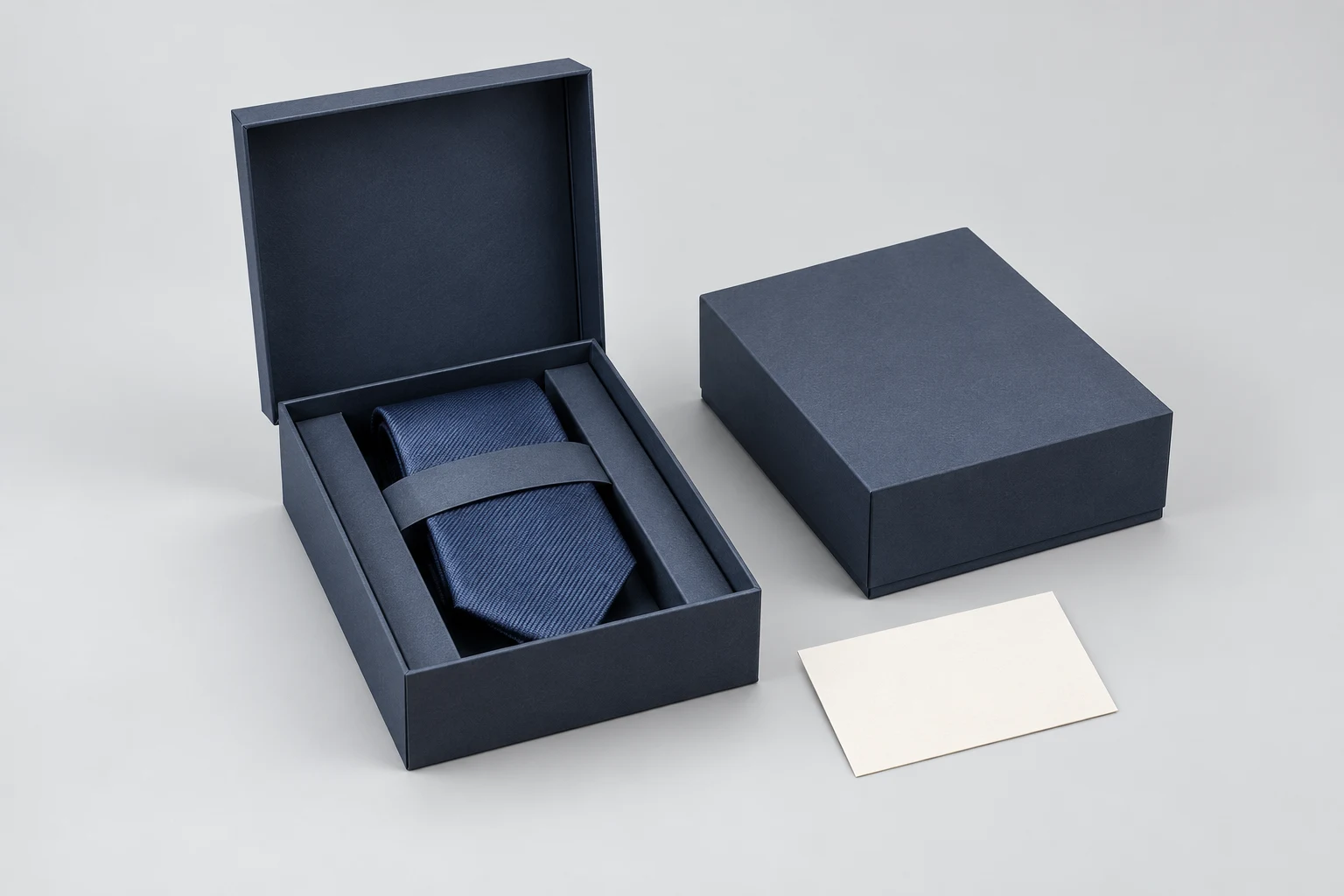
Agree a defect catalogue before inspecting a bulk gift-box order. Describe each fault, its location, its effect on use and the evidence needed to judge it. Separate critical, major and minor classifications from the sampling plan and lot-release decision. Inspect identified production units against the approved specification, record findings consistently and hold unresolved failures for an authorized decision rather than accepting a vague “normal defect rate.”
Reddit buyers ask how much defective packaging is normal and how to arrange an inspection before shipment. Recent sourcing discussions add another concern: inspection access can be difficult to coordinate once production is finished. Those questions do not establish a universal acceptable percentage. They point to a missing agreement about what will be checked and what happens when it fails.
Scope: ordinary custom paper gift boxes, empty-box orders and agreed pack-out checks. Product safety, food contact, child-related risks and other regulated uses require specialist assessment. This guide is a proposed buyer workflow, not a certified inspection report, legal standard or statement of Triya Gift defect rates.
Four words that prevent four different arguments.
A specified requirement is not met. Describe the observation, not just “poor quality.”
The consequence of the fault in the intended use. Agree this before inspection.
The identified units examined from a defined lot under an agreed selection plan.
The authorized decision: release, hold, sort, rework, replace or reject.
A prototype approval asks whether the proposed design is acceptable. Bulk inspection asks whether the production lot meets the agreed requirements. Keep the approved sample and specification available, but do not treat the best sample in the room as evidence for every packed carton.
START WITH CONSEQUENCES
A classification matrix, not a universal rulebook.
| Class | Decision basis | Packaging example | Required response |
|---|---|---|---|
| Critical | A credible safety hazard or failure of an applicable mandatory requirement | A sharp foreign object discovered inside a presentation box | Isolate affected material and escalate under the agreed safety procedure; a sampling pass does not resolve the hazard |
| Major | The box cannot perform its specified function or is unacceptable for the agreed sale | A drawer jams; an insert cannot hold the specified product; the wrong approved artwork is used | Record affected units and apply the agreed hold, correction and lot-decision process |
| Minor | A limited departure from the agreed appearance criteria that does not materially impair intended use | A small cosmetic mark in an agreed low-visibility area, within the defined minor-defect description | Record against the agreed visual boundary and apply the selected acceptance plan |
Location and consequence matter. A mark across a brand name may not be equivalent to a mark beneath an insert. A glue smear touching the product can have a different consequence from one on an unused internal surface. Do not downgrade a fault simply because it is small or common.
Build a defect catalogue another inspector can use.
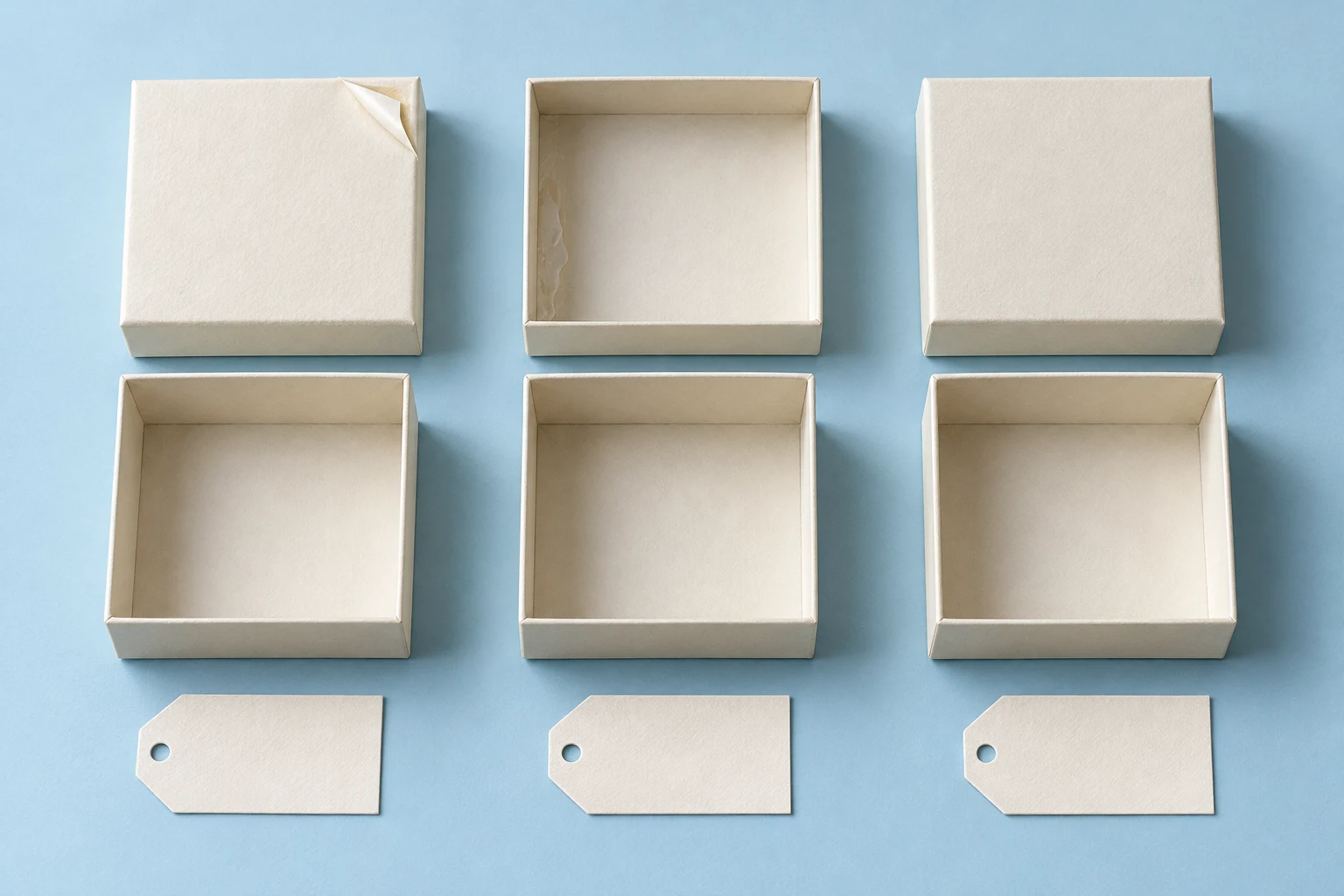
- Name the reference. Record box SKU, drawing, artwork, material and insert revisions. Identify the retained physical sample and any approved boundary samples.
- Describe the fault precisely. Use a defect code, component, panel location and visible or functional symptom. “Corner wrap lifting on the front lid edge” is more useful than “bad finish.”
- Define the observation conditions. Agree lighting, viewing distance, orientation and handling sequence. Photograph a whole unit and a close view with a scale where size matters.
- Agree the boundary. State the measurement or visual criterion and how borderline findings are escalated. Do not invent a millimetre tolerance from a generic checklist.
- Connect it to an action. Name the approver and the process for segregating, correcting and reinspecting material.
For magnetic rigid boxes, include alignment, closing behavior, wrap attachment and the specified product fit. For drawer boxes, check tray travel, pull attachment and sleeve condition. For foldable gift boxes, inspect the erected structure as well as the flat-delivered pieces. These are review prompts; test loads, cycle counts and limits must be agreed for the actual design.
SAMPLING IS A SEPARATE DECISION
AQL is not a promise of zero defects.
ASQ describes sampling as using part of a population to draw conclusions about it. Its Z1.4 guidance describes an acceptance-sampling system with switching rules for a continuing stream of lots. An AQL value alone is not a complete inspection plan, and an accepted sample cannot prove that every unexamined box is conforming.
Have a qualified inspection provider define the lot, selection procedure, sample size, defect classes, acceptance/rejection criteria and applicable rules. Identify mixed SKUs or revisions rather than combining unlike goods without a plan. Provide access to the defined lot, not only cartons preselected for display.
Count defects and defective units separately. One box can have several observations. Record the unit ID and each defect, then follow the plan's counting rules. Do not change the denominator or draw fresh samples repeatedly just to obtain a pass.
The inspection record should survive the shipment.
| Record field | What to retain |
|---|---|
| Lot identity | Purchase order, SKU/revision, stated quantity, carton references and production status |
| Selection and conditions | Sampling plan, units/cartons selected, access limitations, date, inspector and viewing conditions |
| Finding | Unit ID, defect code, location, measurement or observation, severity and photo reference |
| Decision | Plan result, unresolved questions, authorized disposition and affected quantity |
| Correction and closure | Rework/sort record, reinspection scope and result, repacking confirmation and release authorization |
These are proposed collection fields, not internal measurement results. Keep observed counts with their inspected denominator and selection method. Do not publish the sample's observed percentage as a guaranteed defect rate for the full shipment.
After inspection: hold, correct, verify, release.
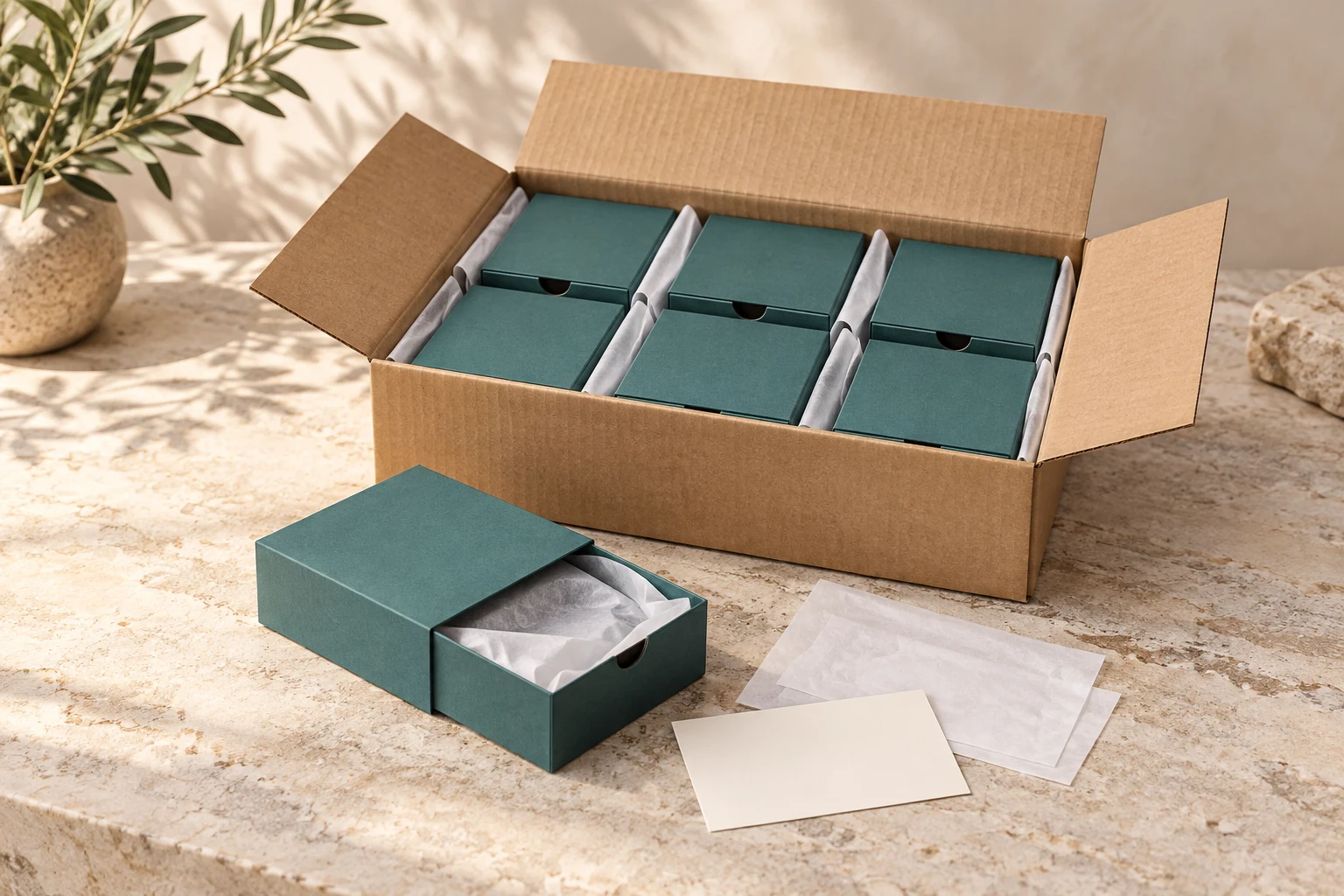
Agree the inspection window and shipping-release authority before the planned dispatch. Record what was finished and packed when the inspection occurred. If access is incomplete, report that limitation rather than describing an unexamined balance as passed.
For a failed requirement, isolate the affected stock and agree the correction. Identify reworked or replaced units, then verify them under the agreed reinspection process. Do not mix corrected and unchecked goods without traceability. Confirm that inspected units have been repacked with the specified separators and carton quantities.
Visual and functional QC does not replace distribution testing, nor does a transport test prove that every production unit meets the artwork and construction specification. Keep those evidence types separate.
Buyer questions.
What percentage of defective gift boxes is normal?
There is no universal percentage suitable for every order. Agree requirements, severity, sampling and disposition with the supplier and inspector. Reddit anecdotes are not acceptance criteria.
Should every cosmetic mark be minor?
No. Evaluate visibility, agreed appearance boundaries and impact on sale or use. A small mark can still make a premium presentation unacceptable under the agreed specification.
Does a passed inspection guarantee the whole order?
No. Sampling has limits, and the report covers its recorded scope and conditions. Read the lot identity, method, exclusions and unresolved findings alongside the result.
Can the supplier repair a defect without telling me?
Define permitted correction and approval steps in advance. Changes to materials, artwork or construction should not be treated as silent substitutions.
BUILD QUALITY INTO THE BRIEF
Quote the box.
Agree what “acceptable” means.
Send Triya Gift your box style, product dimensions, quantity, artwork and delivery requirements, plus any defect photographs or inspection specification. Ask to confirm sample references, inspection access and release responsibilities before production.
Discuss your box specification ↗