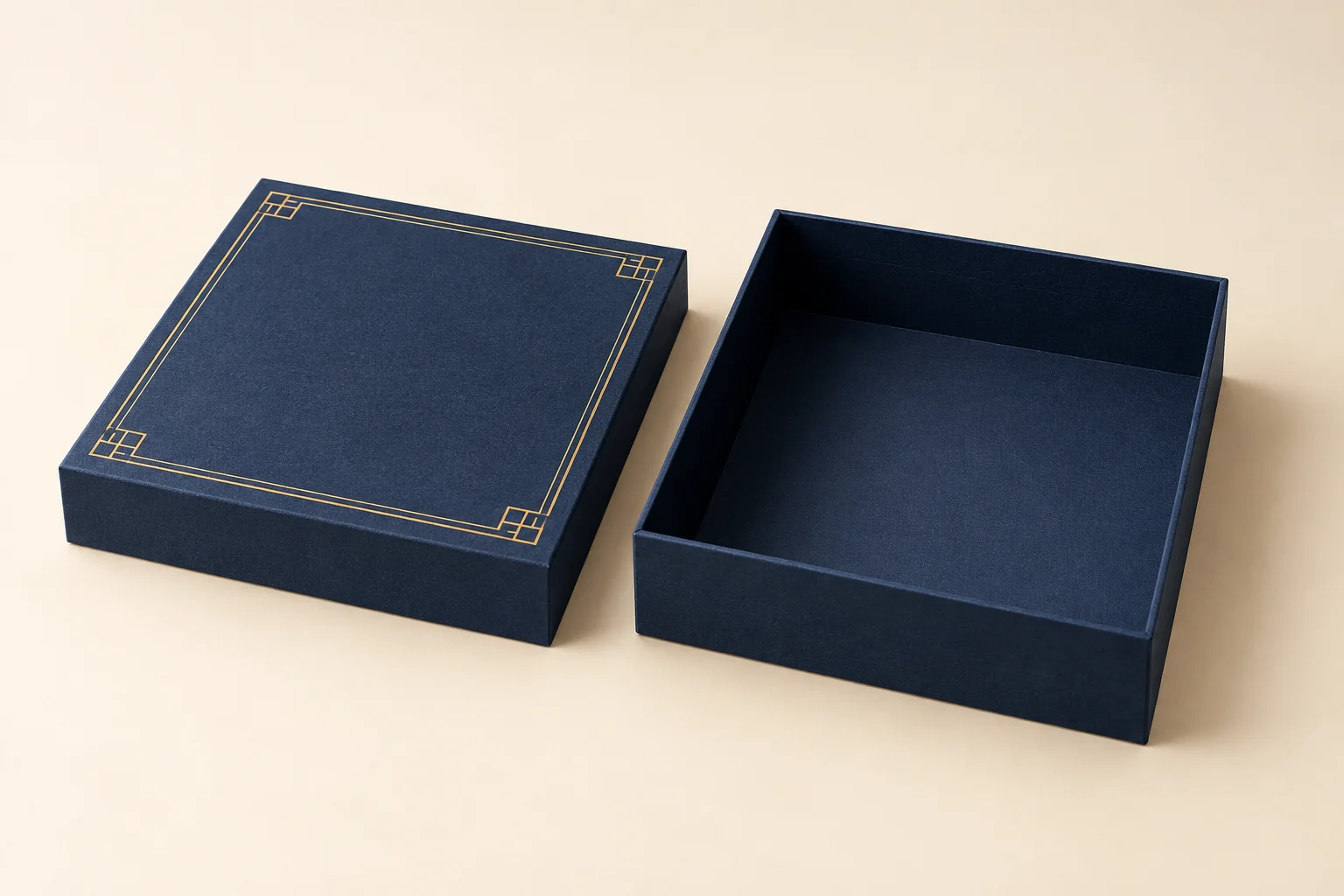
Scope: decorative finishes on paper-wrapped rigid boxes, drawer sleeves and printed cartons. This is a buyer’s visual review method, not a laboratory test or a claim about a particular factory’s performance. Process limits depend on the chosen paper, tooling and production sequence.
Define the effect before naming the process
Foil transfers a decorative layer to selected areas. Embossing raises a design; debossing recesses it. Blind embossing uses relief without a printed or foiled mark. Spot UV creates a selective cured coating, often used for gloss contrast. A photograph can conceal the difference between a reflective foil, a coating and a raised surface.
Start with the effect you need: visibility, tactile relief or a subtle reveal as the box moves. Ask for a physical reference and identify the paper and base coating. A flat swatch helps compare appearance, but it cannot show what happens when that paper is wrapped, folded or rubbed against another package.
A finish-specific approval matrix
| Finish | Inspect on the sample | Record with the supplier |
|---|---|---|
| Foil | Missing coverage, ragged edges, filled small gaps and alignment with printed details. | Foil reference, artwork revision, substrate and agreed visual defect examples. |
| Emboss / deboss | Readable relief, consistent shape, paper cracking and unwanted impression on the reverse. | Raised or recessed direction, tooling reference and accepted relief sample. |
| Spot UV | Gloss visibility from several angles, edge alignment, surface consistency and folds. | Flat or raised effect, mask revision, base finish and supplier-specified exclusions. |
| Combined finishes | Whether foil, relief and print land together on the finished box. | Process order, registration expectations and a combined production sample. |
Avoid a universal minimum line width or alignment tolerance copied from another supplier. Request the limit for your actual design and process. Simplifying a small mark may be more dependable than specifying several tightly aligned treatments.
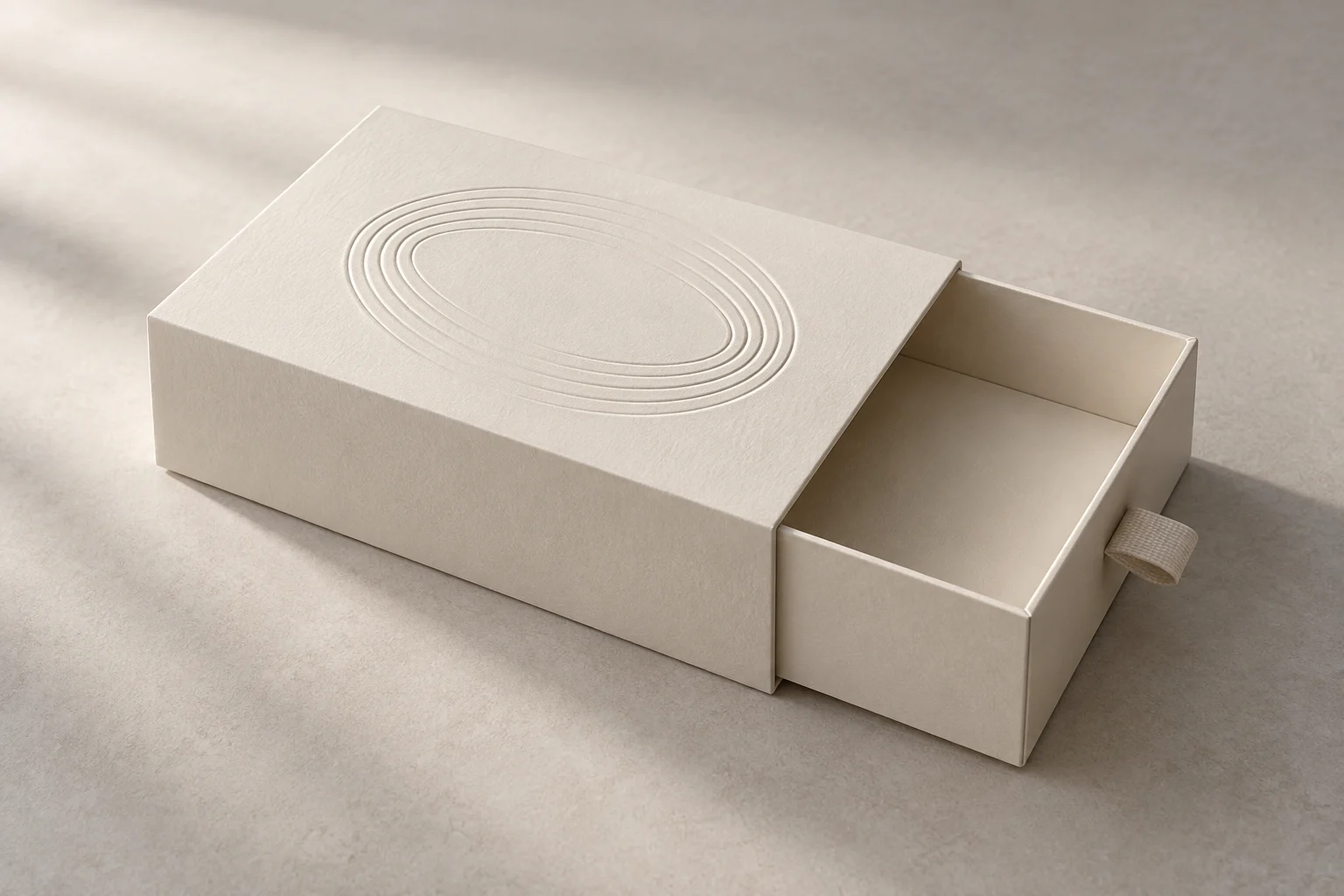
Use a repeatable sample review
- Identify each sample. Record box style, paper reference, coating, finish, artwork revision and date. Confirm which components match the intended production materials.
- Control the comparison. Use the same light source, background and viewing distance. Photograph the same marked area face-on and at an oblique angle. Record the conditions so another reviewer can repeat them.
- Inspect the assembled box. Examine corners, wrap edges, folds and visible panels. Check whether the mark remains legible when the package is closed and displayed normally.
- Review handling separately. Reproduce the intended packing and unpacking sequence. Record contact materials and any visible change. This is a practical screening exercise; request a defined abrasion or adhesion test if the project needs measured performance.
- Resolve and retain. List each defect location, photograph and decision. Agree acceptance criteria, retain a signed reference and request a revised sample if the process or materials change.
A useful record has these fields: sample ID; material and coating; finish reference; artwork revision; observation location; lighting; handling sequence; photo ID; accepted/revise decision; reviewer; date. These are proposed collection fields, not internal test results. Do not infer a defect rate or durability claim from one demonstration sample.
What the production handoff needs
Supply the printed design and each finish mask as clearly identified information, using the converter’s file instructions. Confirm orientation, registration, cut and fold exclusions, and the final approved revision. The printer’s spot UV file guide illustrates why finish artwork and fold clearances need explicit treatment; its instructions should not replace your own supplier’s specification.
For structural artwork checks, use our packaging dieline checklist. For overall fit and production approval, see the sample approval guide. Keep the finish reference in that same approval record.
Choose a finish around the box you will order
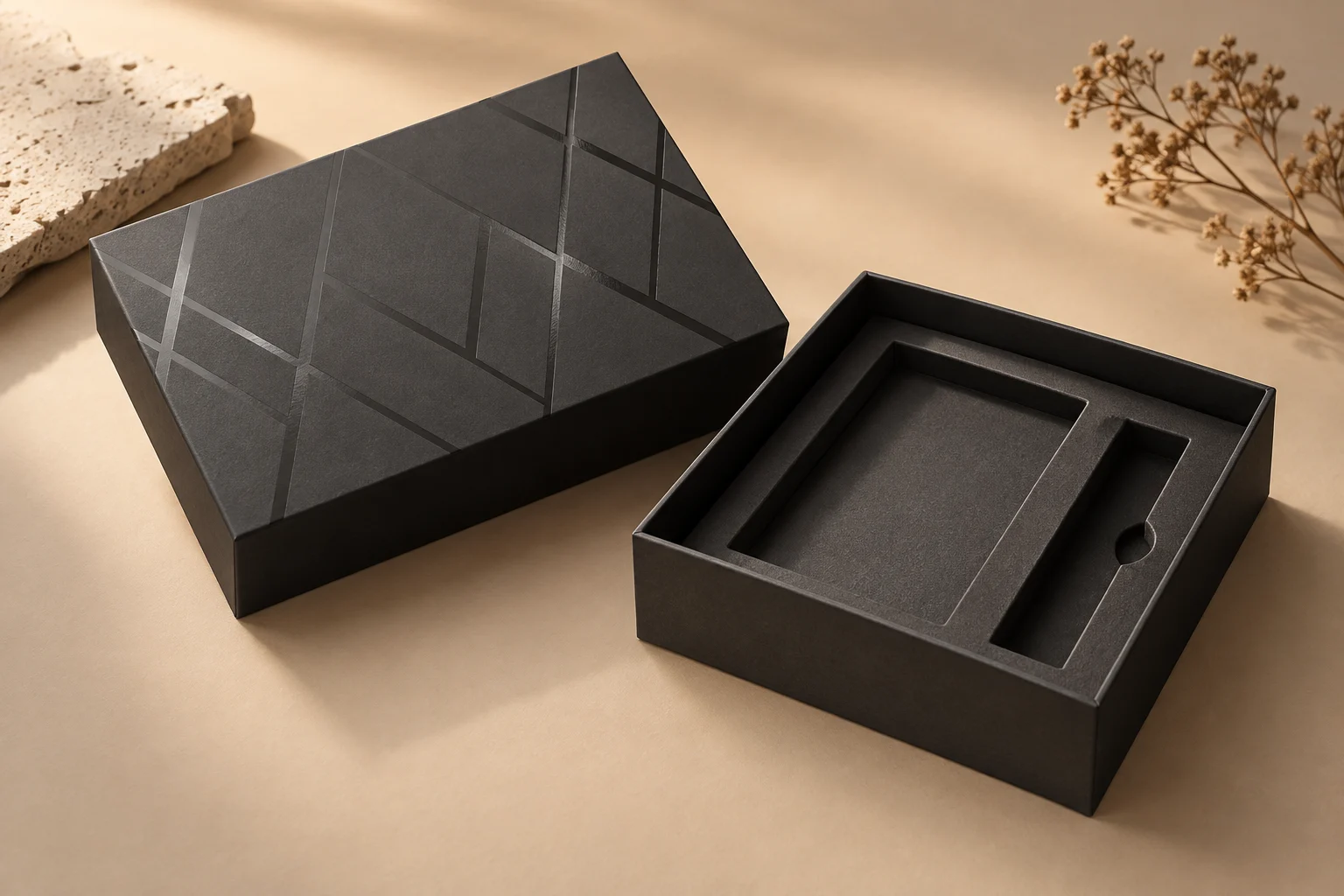
A drawer box puts repeated handling on its sleeve and opening edge. A magnetic rigid box makes the lid and opening sequence prominent. Start with those contact and viewing areas, then explore Triya Gift’s material and finish options. The illustrations show design directions; approve a physical sample for the exact effect you order.
Finish approval FAQ
Can a digital proof approve foil shine or embossing depth?
It can approve the intended location and design. Use a physical sample for reflection, relief and interaction with the actual paper.
Can foil and embossing be used together?
They can be combined, but tooling, substrate and alignment must be reviewed together. Ask for a combined sample rather than approving two unrelated swatches.
Why is black-on-black gloss hard to see?
Its contrast changes with lighting and viewing angle. Review it in the expected display conditions and keep essential information readable independently of the decorative effect.
Which finish costs least?
There is no reliable universal ranking. Request comparable quotes with the same box, quantity, finish area and delivery terms, separating tooling and sampling where applicable.
Request a finish sample for your custom box
Send Triya Gift your box dimensions, quantity, paper preference, logo artwork, desired finish reference and arrival date. Ask for the proposed finish process, sample scope and acceptance record with your quotation.
Request a box and finish quotation