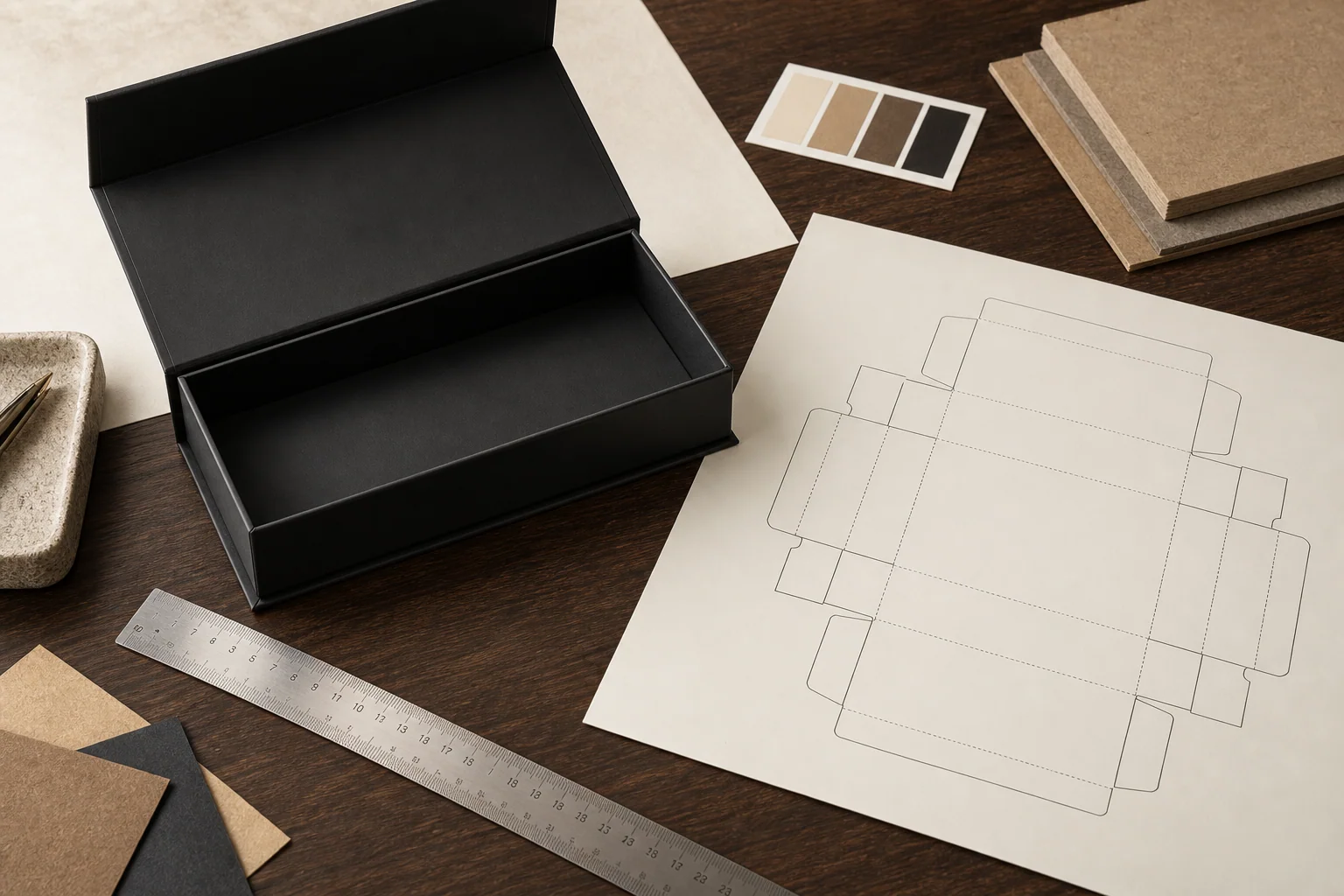
Applicable scope
Paperboard cartons, corrugated mailers, rigid-box wraps, drawer boxes, sleeves, inserts and labels.
Limitations
Supplier prepress requirements and applicable label rules take priority. This guide is not a substitute for the approved production dieline or market-specific compliance review.
What a dieline should communicate
A dieline is the supplier’s structural production drawing, not a decorative mockup. It should make each cut, crease, glue area, panel and non-print zone understandable. Community discussions repeatedly point to the same practical rule: get the printer’s final template first, then build artwork around that exact file.
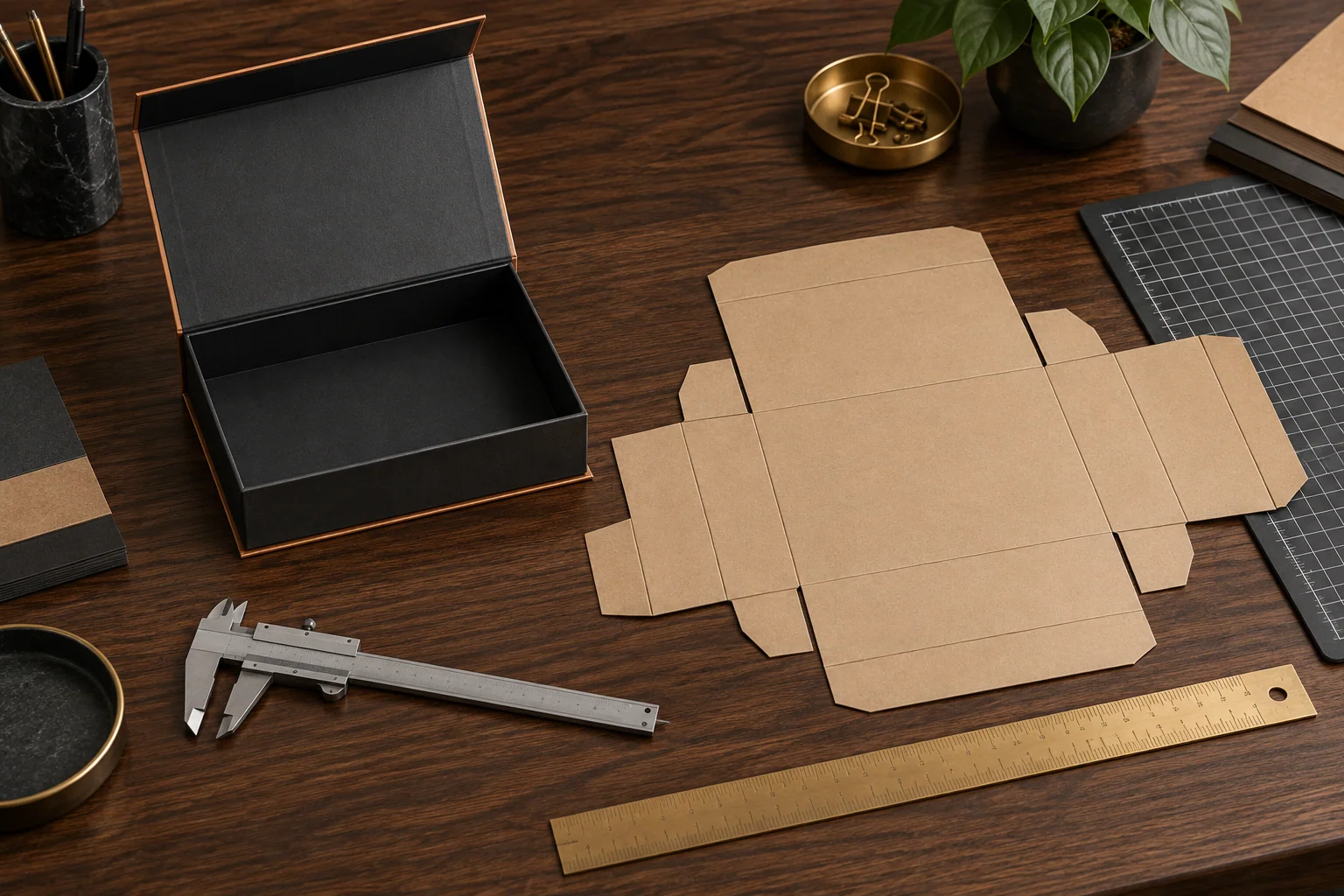
Cut line
The path defining the finished outer shape.
Crease line
The fold location; it is not a safe place for critical type or fine registration.
Bleed
Artwork extending beyond trim according to the supplier’s specification.
Live area
The area reserved for critical copy, logos and barcodes away from edges, folds and glue.
Packaging dieline checklist
| Check | What to verify | Why it matters |
|---|---|---|
| Approved file | Supplier, structure, material, dimensions and revision are named. | Different board and construction can require different allowances. |
| Scale & units | Template is 100% scale; dimensions and units are clear. | Conversion or scaling errors can move artwork across panels. |
| Layers | Artwork, dieline, annotations and technical marks are separate. | Prepress can interpret and protect the structural information. |
| Bleed & safe area | Background extends as specified; critical copy stays inside the live area. | Reduces trimmed white edges and text near folds. |
| Panels & folds | Front, back, inside panels and opening direction are reviewed on a folded proof. | Prevents upside-down, hidden or broken-across-fold artwork. |
| Glue & non-print zones | Artwork avoids glue tabs, seams and specified no-print zones. | Helps preserve adhesion and readable graphics. |
| Barcode / variable data | Position, quiet area and any lot-code field are agreed. | Allows the required scan or coding process to be checked. |
| Version control | One approved file name, revision date and approver are recorded. | Prevents an earlier proof from entering production. |
The questions buyers and designers raise most often are practical: whether an online template is safe to use, where background bleed belongs, how to keep artwork clear of glue tabs, and how to avoid an unexpected panel orientation after folding. Treat each as a supplier-confirmation item—not an assumption carried over from a different box style.
A practical artwork-release process
- Lock the structure first. Confirm the selected mailer, magnetic rigid box or drawer box before requesting final artwork placement.
- Use the latest supplier file. Ask which revision is approved for sampling and whether its material or construction assumptions changed.
- Run a panel-by-panel review. Check front, back, sides, opening, inside, fold and glue areas with the dieline visible.
- Confirm production details. Review color approach, finish, minimum printable detail and barcode/variable-data needs with the supplier.
- Approve a controlled record. Save the final PDF/source file, dieline version, color proof and approved sample record together.
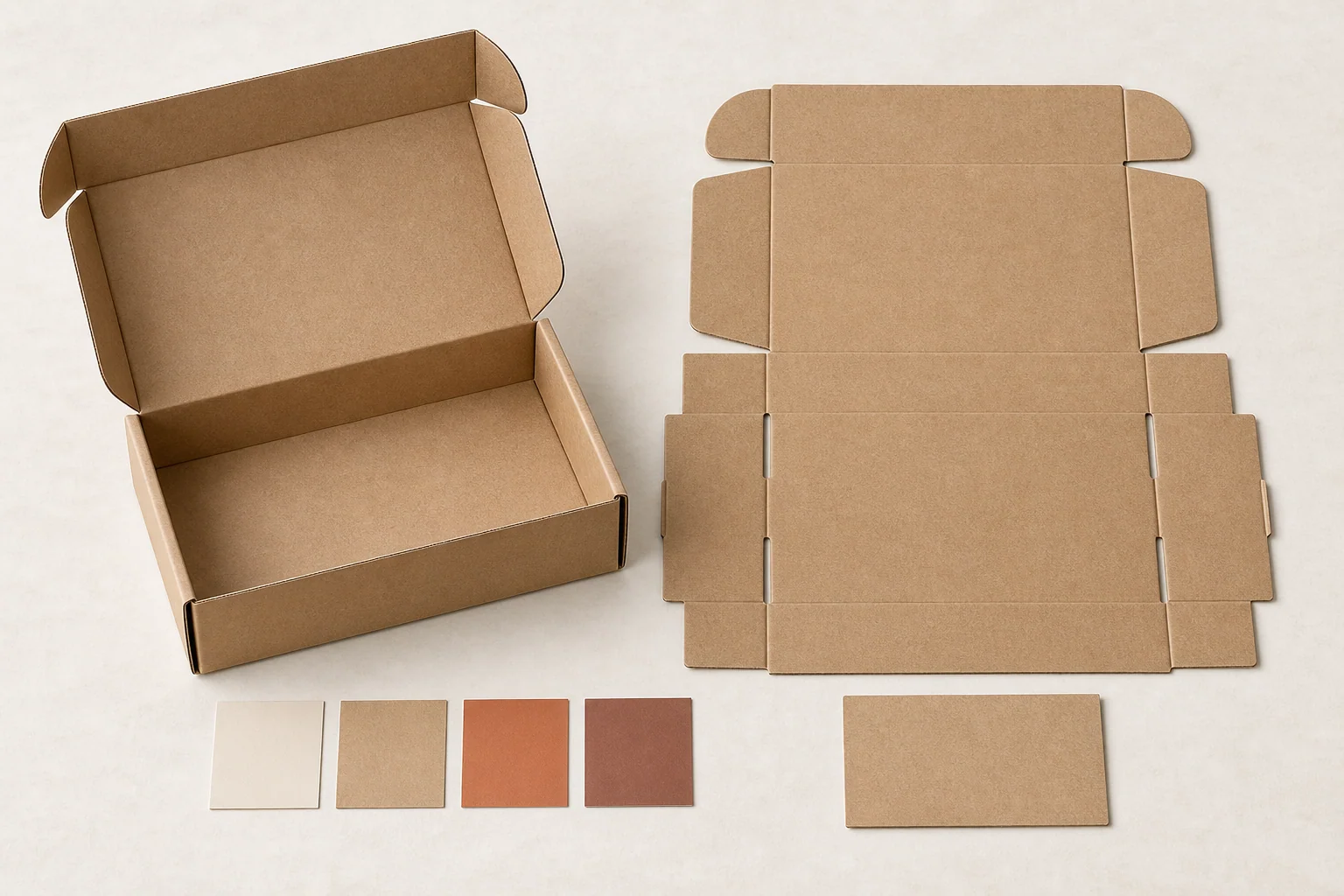
What to send Triya Gift
Share the product dimensions, target box style, artwork files, desired finishes, quantity and destination through the Triya Gift quote page. We can prepare the structure and prepress questions alongside the quote. For material and finish choices, see custom packaging options; for physical approval, use the sample-approval guide.
Packaging dieline FAQs
Can I use an online box template for production?
Use it only for an early concept. Final artwork should be rebuilt on the supplier’s approved dieline for the exact structure and material.
Who supplies the final dieline?
The packaging supplier or structural team normally provides it once the box style, size and material are defined.
Does a 3D mockup replace a printed sample?
No. A mockup helps review direction; the approved production file and physical sample are the controls for fit, finish and artwork placement.
Release artwork with confidence
Need a custom box dieline for your project?
Tell Triya Gift the product, structure, quantity and artwork stage. We will help turn the brief into a quote-ready packaging and prepress path.
Request a custom packaging quote