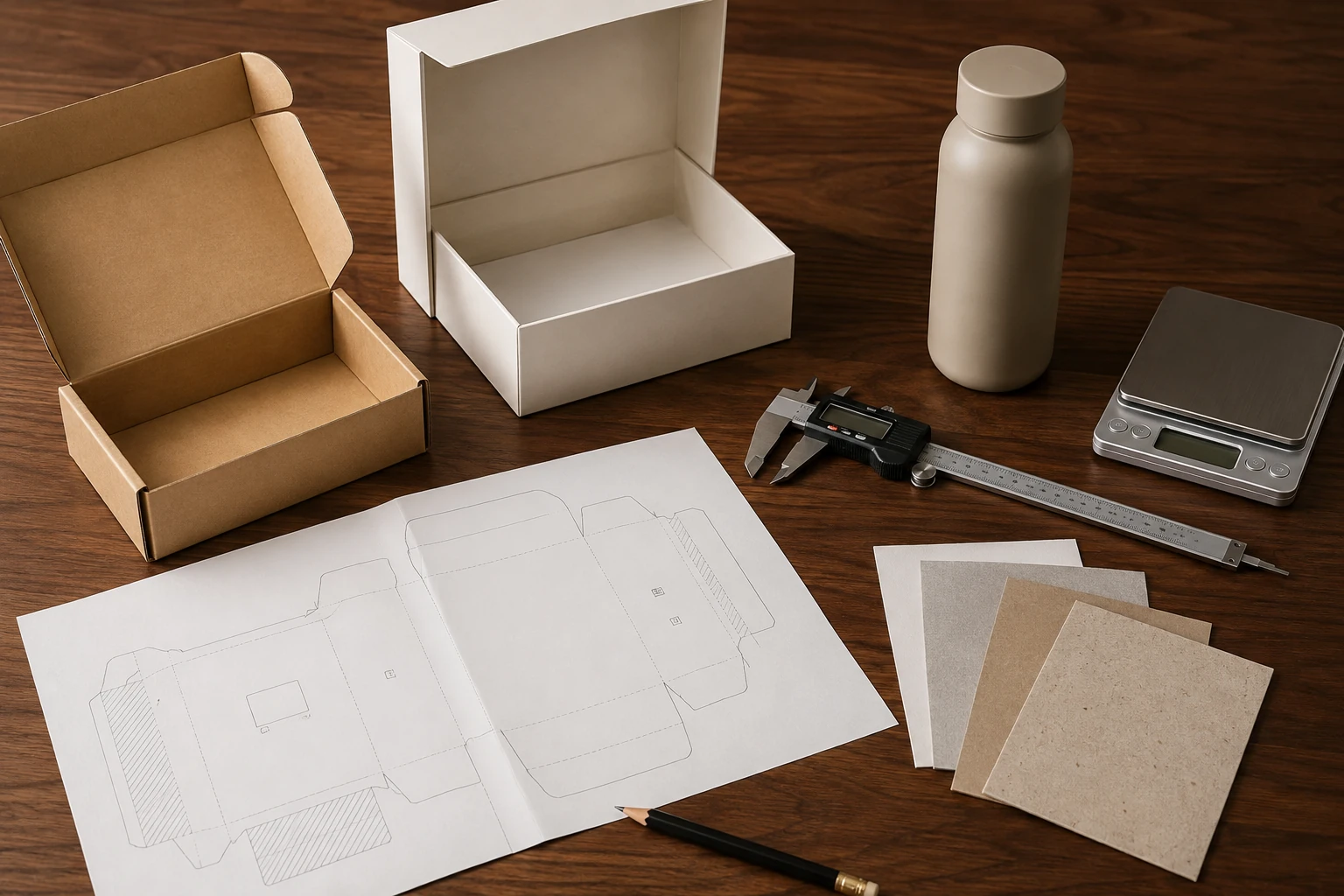
Applicable scope
Paper-based rigid boxes, drawer boxes, corrugated mailers, folding cartons and paper or molded-fiber inserts used as secondary or transit packaging.
Limitations
This guide does not establish food-contact, medical, dangerous-goods or market-specific legal compliance. Confirm those requirements with qualified regulatory and testing parties for the destination market.
Why incomplete RFQs create misleading quotations
A useful RFQ gives every supplier the same commercial and technical brief. Packaging type, dimensions, quantity, materials, print coverage, sample level, destination and delivery responsibility all change the price. Physical samples, reorder conditions, freight inclusion and artwork support should be compared alongside the first unit-price figure.
The goal is not to collect the lowest headline price; it is to compare equivalent offers. A 1,000-piece magnetic rigid box delivered to Los Angeles and an ex-works folding carton without an insert are different products with different responsibility boundaries, so their totals cannot be compared directly.
Definitions that keep the sourcing conversation precise
RFQ
A request for quotation: a controlled set of commercial and technical inputs sent to suppliers for pricing.
Specification
The measurable product, structure, material, artwork, finish, packing and acceptance requirements behind the quote.
Comparable quote
A supplier offer mapped to the same specification version, quantity, currency, delivery rule, named place and cost inclusions.
Change control
A record of what changed after quotation or approval, who accepted it, and its effect on cost, quality or schedule.
A repeatable product-measurement method
GS1's package-measurement standard is designed to make dimensional data consistent and repeatable. Its general principle is to establish the natural base and measure maximum height, width and depth, including projections such as caps or lids. [4] For a packaging RFQ, use the following documented method as a working specification process:
- Define the measurement object. Use the finished, saleable product with every accessory that must fit inside the box. Photograph the exact configuration.
- Set orientation and units. Mark front, top and base; use one unit system throughout. State whether requested box dimensions are internal or external.
- Measure maximum dimensions. Use a suitable calibrated or verified caliper/rule without compressing soft products. Measure the widest, deepest and tallest points.
- Check variation. If the product varies, measure a representative set chosen by the buyer's sampling plan. Report sample count, minimum and maximum—not an invented universal allowance.
- Record mass and fragile zones. Weigh the complete product set on a verified scale and identify glass, protrusions, finishes, controls and surfaces that cannot carry load.
- Make the record auditable. Save date, operator, instrument ID, unit, sample count, photos and data-file version. Re-measure after a product or accessory change.
Measurement evidence method: retain the raw readings and photos beside the RFQ version. The final insert clearance and transit tolerance should be validated on production-intent samples; this page does not prescribe a universal clearance because product geometry, material recovery and transport risk differ.
Complete custom packaging RFQ checklist
Use “supplier to recommend” where a decision is genuinely open, but never leave the performance need blank. FEFCO structure codes provide an internationally used communication base for corrugated packaging styles; use the current drawing or supplier dieline in addition to the code because dimensions and construction details still matter. [5]
| RFQ group | Required inputs | What the supplier must return |
|---|---|---|
| Project control | Project/SKU name, RFQ number, specification revision, issue date, buyer contact and confidentiality requirement | Quote number, quoted revision, validity period and stated assumptions |
| Product | Maximum L × W × H with units, measurement orientation, packed weight, photos, fragile zones and accessory list | Proposed fit, required clearances, insert concept and any missing product data |
| Sales & route | Retail, gifting or ecommerce use; destination; parcel/LTL/container route; climate or handling concerns | Recommended outer protection, master-carton plan and transport assumptions |
| Structure | Box type or reference, FEFCO code where applicable, opening experience, internal/external size, flat or formed delivery | Named structure, finished dimensions, dieline responsibility and assembly method |
| Insert | Product orientation, removal method, accessory wells, display angle, load points and restricted contact areas | Insert material, thickness/grade, retention method and prototype plan |
| Materials | Board grade/thickness target, paper or wrap, flute if corrugated, recycled/certified requirement and restricted substances | Exact proposed material construction, nominal values, tolerances and alternatives clearly separated |
| Artwork status, dieline version, CMYK/spot colors, inside/outside coverage, barcode and variable-data needs | Print method, ink/color plan, plate or setup charge and proof type | |
| Finishes | Lamination/varnish, foil, emboss/deboss, texture, window, ribbon or magnet requirements and target samples | Process sequence, tooling, achievable limits and separately priced alternatives |
| Quantity | Annual forecast, quote quantities, launch quantity, reorder pattern and acceptable over/under policy | MOQ basis, unit price by tier, production overage policy and reorder price conditions |
| Sampling | White sample, printed prototype or production-intent sample required; quantity; approval owner; target date | Sample cost, tooling included, production differences, shipping cost and revision cycle |
| Quality | Critical dimensions, appearance limits, color reference, workmanship criteria, inspection plan and required reports | Proposed tolerances, inspection method, control sample and nonconformance process |
| Testing | Fit, rub, adhesion, compression, drop, vibration or climatic needs based on product risk and route | Test method, laboratory status, sample conditioning, pass criteria, report format and cost |
| Packing | Polybag/tissue/divider restrictions, pieces per carton, maximum carton mass, labels, pallet and moisture protection | Master-carton dimensions, gross/net mass, packing quantity and pallet/container assumptions |
| Delivery | Incoterms® 2020 rule plus named place/port, ship-to address, mode, split shipment and required arrival date | Quoted responsibility boundary, freight inclusion, estimated transit basis and excluded local charges |
| Commercial | Currency, payment expectations, tooling ownership/storage, inspection party, claim window and documentation needs | Tooling/sample/unit/freight lines, payment terms, quote validity, exclusions and change-order method |
Normalize quotations before choosing the lowest cost
The quotation should name the Incoterms® 2020 rule and a precise named place. ICC rules allocate delivery tasks, costs and risks between seller and buyer; an abbreviation without the named place is incomplete. [6] Do not assume an EXW, FOB and DDP price includes the same freight, clearance or destination work.
Use actual quoted or documented amounts. “Accepted usable units” should come from the purchase agreement, inspection result or the buyer's documented planning assumption—not an invented industry defect rate. State recoverable taxes separately where appropriate and have finance or customs specialists validate duty treatment.
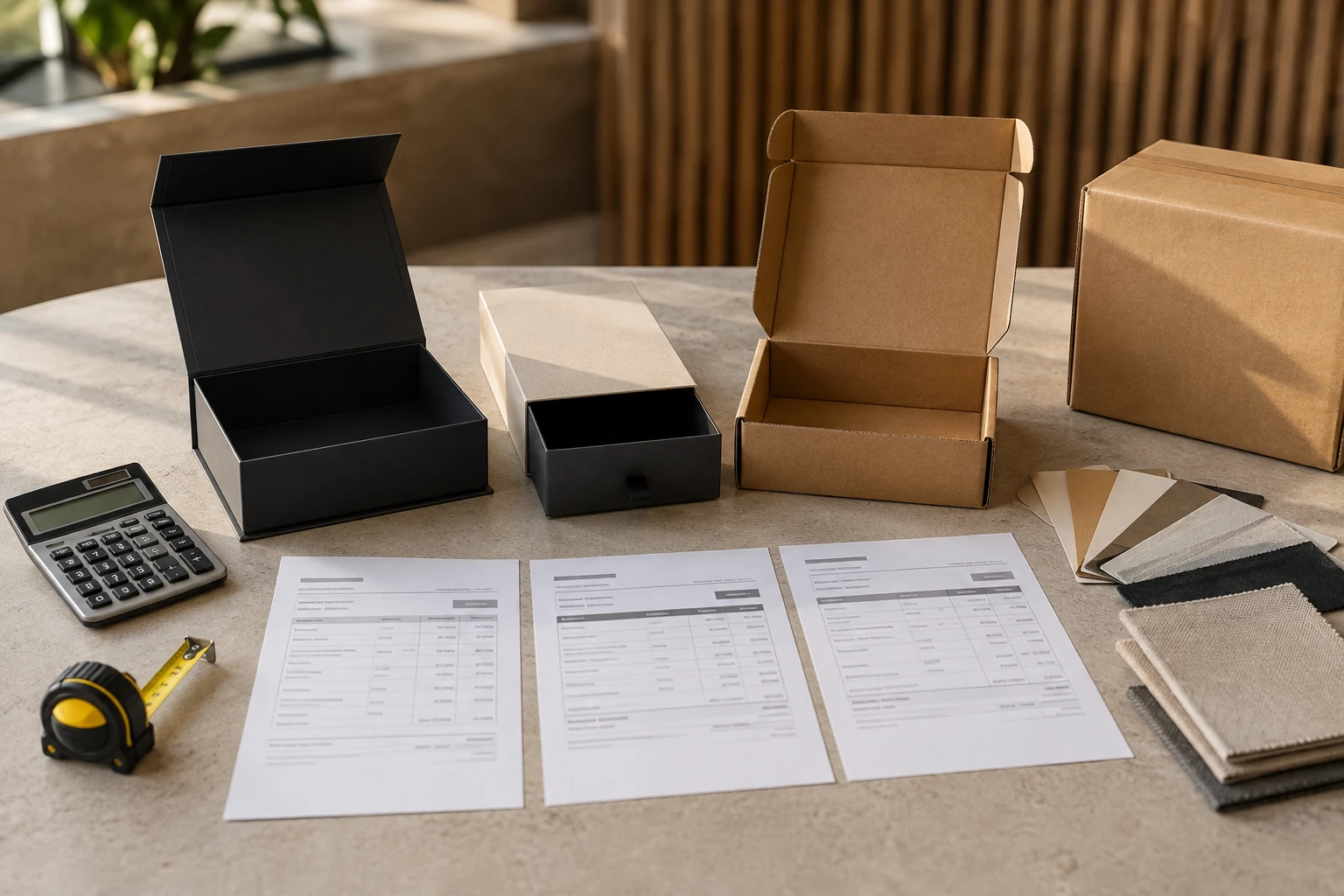
| Comparison field | Supplier A | Supplier B | Supplier C |
|---|---|---|---|
| Specification revision | Enter quoted version | Enter quoted version | Enter quoted version |
| Quantity / usable units | Enter both | Enter both | Enter both |
| Unit production | Currency + amount | Currency + amount | Currency + amount |
| Tooling / plates / samples | Separate lines | Separate lines | Separate lines |
| Incoterm + named place | Exact wording | Exact wording | Exact wording |
| Freight / local charges | Included + excluded | Included + excluded | Included + excluded |
| Lead-time start / finish | Define both | Define both | Define both |
| Inspection / test plan | Method + cost | Method + cost | Method + cost |
| Comparable landed total | Calculated basis | Calculated basis | Calculated basis |
Ask for a lead-time map, not one number
Engineering & approval
Dieline, artwork preflight, material confirmation, sample manufacture, sample shipping and buyer revision/approval.
Production window
State whether it begins after deposit, approved artwork, approved sample, material receipt or all prerequisites.
Release & delivery
Inspection, packing, export booking, handover, transit, clearance and destination delivery as applicable.
Request calendar dates and dependencies for each stage. Separate supplier manufacturing time from international transit and buyer approval time. For MOQ and sampling context, see the custom packaging MOQ guide and sample approval checklist.
Using a separate product maker and box manufacturer? Use our supplier handoff checklist to agree the packing site, receiving checks and component balances before dispatch.
Define quality acceptance before the purchase order
A quote is not complete if “good quality” is the only acceptance criterion. Identify critical-to-quality features: product retention, box closing force, finished dimensions, print registration, color reference, glue contamination, scratches, odor, barcode readability and master-carton integrity as relevant. Agree whether approval uses a signed production-intent sample, dimension sheet, visual limit samples, inspection plan or test report.
- Golden sample: identify the physical sample, signatures/date and which characteristics it controls.
- Tolerances: write measurable limits for critical dimensions and clarify the measurement method.
- Inspection: name the sampling plan or agreed check method, inspection stage, reporting format and disposition authority.
- Testing: connect the method and pass criteria to the actual packed product and distribution route.
- Change notice: require approval before material, process, structure, subcontractor or packing changes that affect the specification.
For transport risk, validate the complete product–insert–box–master-carton system rather than testing an empty presentation box. Use the shipping-damage prevention guide to turn observed failures into a test and corrective-action plan.
Email-ready RFQ starter
Related packaging structures and options
Still choosing materials, inserts or finishes? Review all custom packaging products and customization options before issuing the controlled specification.
Custom packaging RFQ FAQs
Can I request a quote with only a reference photo?
A photo can communicate style, but it does not define size, structure, material, print coverage, finish, quantity or delivery responsibility. Send the photo as a reference and ask the supplier to identify every proposed specification and assumption.
Should I ask every supplier for the same MOQ?
Ask for the same quantity tiers so prices are comparable, then let each supplier state its MOQ and economic breakpoints. Confirm whether MOQ applies per size, artwork, color, SKU or total order.
What is the difference between a white sample and a production-intent sample?
A white sample mainly checks structure and fit. A production-intent sample aims to use the proposed materials, print and finishes. Ask the supplier to list any differences from mass production for either sample.
Which Incoterm should I use?
The right rule depends on transport control, customs capability and the transaction. Ask a qualified logistics or trade adviser. Whichever rule is chosen, state the Incoterms® 2020 rule and exact named place in both RFQ and quote.
When is an RFQ ready to send?
It is ready when a supplier can reproduce your requested packaging, price stated alternatives separately, define assumptions and return a quote mapped to one controlled version without guessing critical requirements.
Sources and evidence notes
Reddit sources below are qualitative buyer/supplier discussions used to identify recurring questions. Technical sources provide measurement, structure-code and trade-term foundations. Project-specific requirements, laboratory methods and commercial figures must be validated for the actual order.
- Reddit /r/PackagingDesign: custom packaging companies for small business — comparison criteria including MOQ, samples, landed price, turnaround and responsiveness.
- Reddit /r/smallbusiness: question for small businesses—packaging — buyer request to compare MOQ, unit price, shipping, samples and lead time.
- Reddit /r/smallbusiness: packaging — low-volume setup-cost and shipping-inclusion discussion.
- GS1 Package and Product Measurement Standard — repeatable dimensional measurement principles.
- FEFCO Code — internationally used corrugated packaging design code system.
- ICC Incoterms® 2020 guide — allocation of buyer/seller tasks, costs and risks.
Send one controlled brief
Ready for a packaging quote you can actually compare?
Share your product measurements, quantities, destination, target structure, artwork and required date. Triya Gift can return proposed materials, sample steps, production assumptions and clearly separated quotation lines for your review.
Submit your packaging RFQ