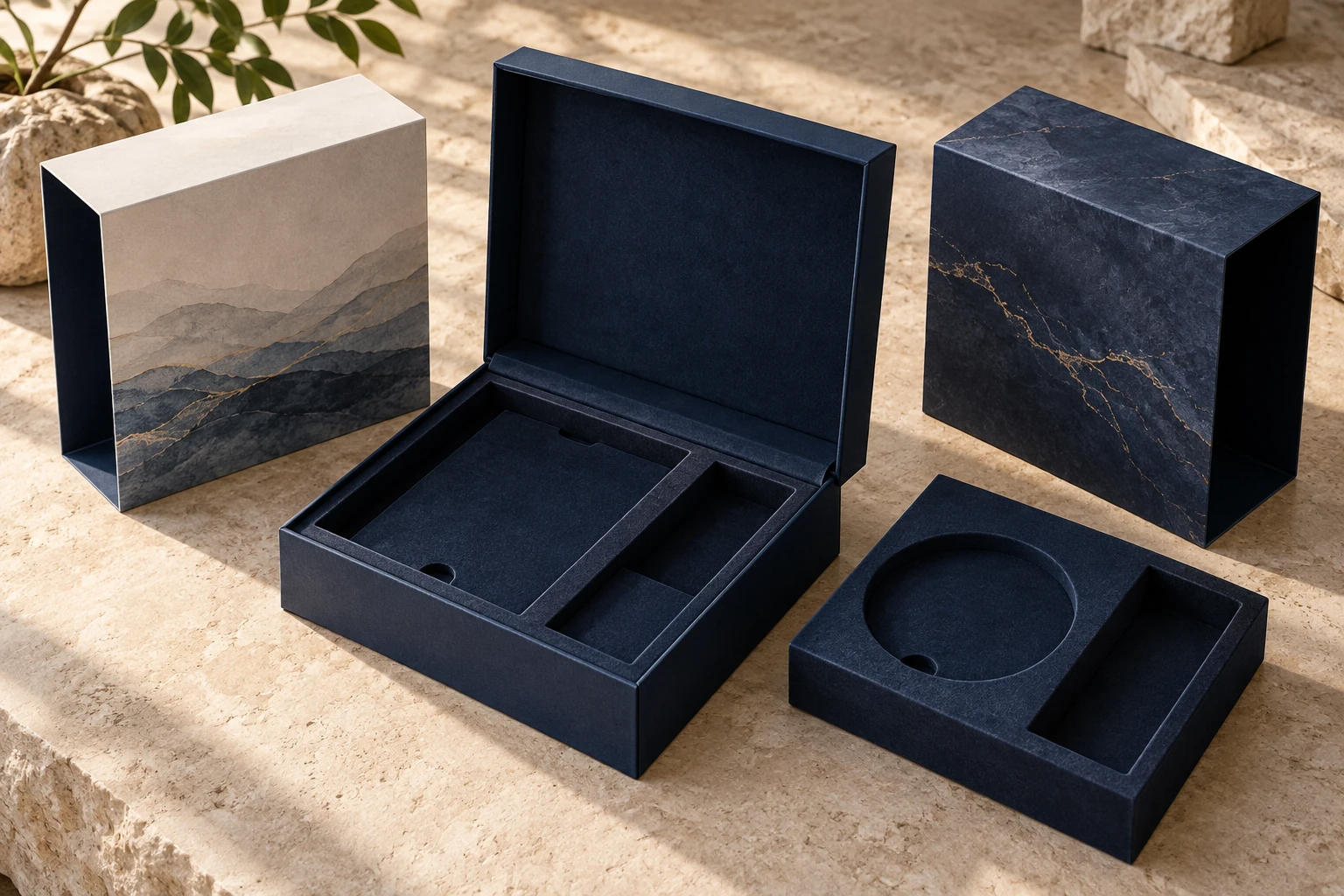
Collectors often value a release as both an object and a presentation. Recent Reddit threads describe buyers who want a premium rigid box, fitted cradle, prototype support and a visual system that can carry later editions. Another small-business discussion asks how to create custom packaging without committing to a large run. These are qualitative buyer signals, not market research or proof of what will sell: low-volume collectible packaging discussion and first-run packaging discussion.
This guide focuses on one useful planning question: what should stay consistent across editions, and what should be version-specific? It is different from a general rigid-box design guide or a comparison of insert materials.
Choose the platform boundary
Start by separating what the editions genuinely share from what may change. “Same size” is not enough by itself: a revised item can alter height, weight, orientation, finger access, insert support or the position of documents. Record confirmed measurements per product version and mark each value as measured, supplier-confirmed or still provisional.
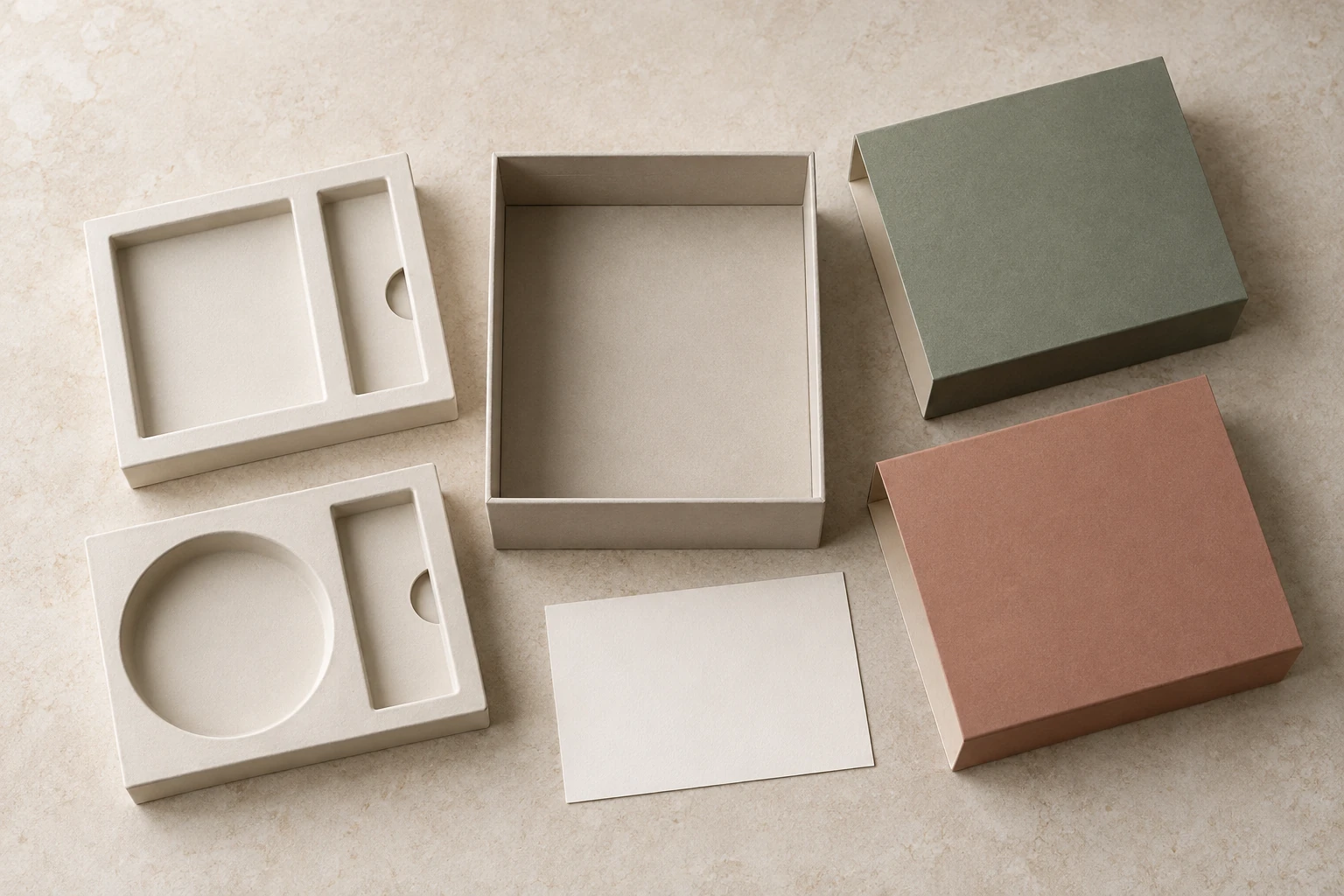
| Component | Potential platform choice | Recheck for every edition |
|---|---|---|
| Outer rigid box | Keep the footprint, opening style and wrap system where product envelope and presentation remain compatible. | Maximum product envelope, packed weight, lid clearance, closure, surface/artwork changes and shipping fit. |
| Fitted insert | Use a replaceable tray or cradle when release objects differ but can be supported by the same base cavity. | Contact points, retention, removal grip, abrasion risk, material, tolerances and loaded-box movement. |
| Sleeve or belly band | Carry edition color, release name or exterior identifier without changing the box body. | Panel dimensions, finish, barcode/label placement, scuffing, fit and whether old stock can be distinguished. |
| Booklet / certificate area | Reserve a consistent document zone where every edition needs accompanying material. | Page count, finished size, language, release-specific content and whether contents are actually included. |
Choose the format for the job
The edition system may use a rigid box for the collectible presentation while a separate shipping carton handles parcel movement. They solve different tasks. Do not expect a keepsake box to act as validated transit protection unless the complete shipping configuration has been evaluated for its route.
| Format | Useful when | Trade-off to discuss |
|---|---|---|
| Magnetic rigid box | A book-style opening and substantial presentation suit the object. | Base construction may be less adaptable than a sleeve or insert; confirm closure and shipping protection. |
| Drawer box | A reveal-through-sliding-tray fits the collector experience and repeated edition layout. | Track fit and pull access depend on the assembled dimensions, wrap and insert. |
| Lid-and-base rigid box | A simple lift-off lid and reusable body are preferred. | Separate lid/base parts and any band must remain matched to the edition. |
| Protective outer mailer | The presentation box needs a separate parcel layer. | It adds a second specification and must be assessed with the loaded presentation pack. |
Explore Triya Gift’s custom magnetic rigid boxes, sliding drawer boxes and custom mailer boxes as possible starting structures. Final suitability, specification, MOQ and timing need confirmation against the actual brief.
Control changes between releases
- Create a platform record. Name the base box drawing, material callouts, approved wrap and closure, internal clear space, and the reference sample. Treat unknowns as open questions rather than assumptions.
- Build an edition matrix. For every planned release, list item dimensions and weight, insert revision, sleeve/artwork revision, included documents, quantity tier and destination. This is a planning worksheet, not a verified project database.
- Identify what changes. Mark each field unchanged, revised or not applicable. A sleeve artwork change may leave structure intact; a product change can affect fit and support even when the outside box appears unchanged.
- Sample the changed interfaces. Check the actual object in the proposed insert, then load the insert into the approved box. Inspect seating, lid/slider movement, edge contact, removal access and whether release identifiers remain visible.
- Trial the shipper separately. If sent by parcel, document the presentation box, protective components, outer carton and destination route. Agree a suitable test method for the real distribution conditions; a desk fit review is not a transit test.
- Release one version at a time. Keep dated artwork and drawing revisions with approval authority. At receiving, compare the delivered edition code and packaging revision to the purchase record before mixing inventory.
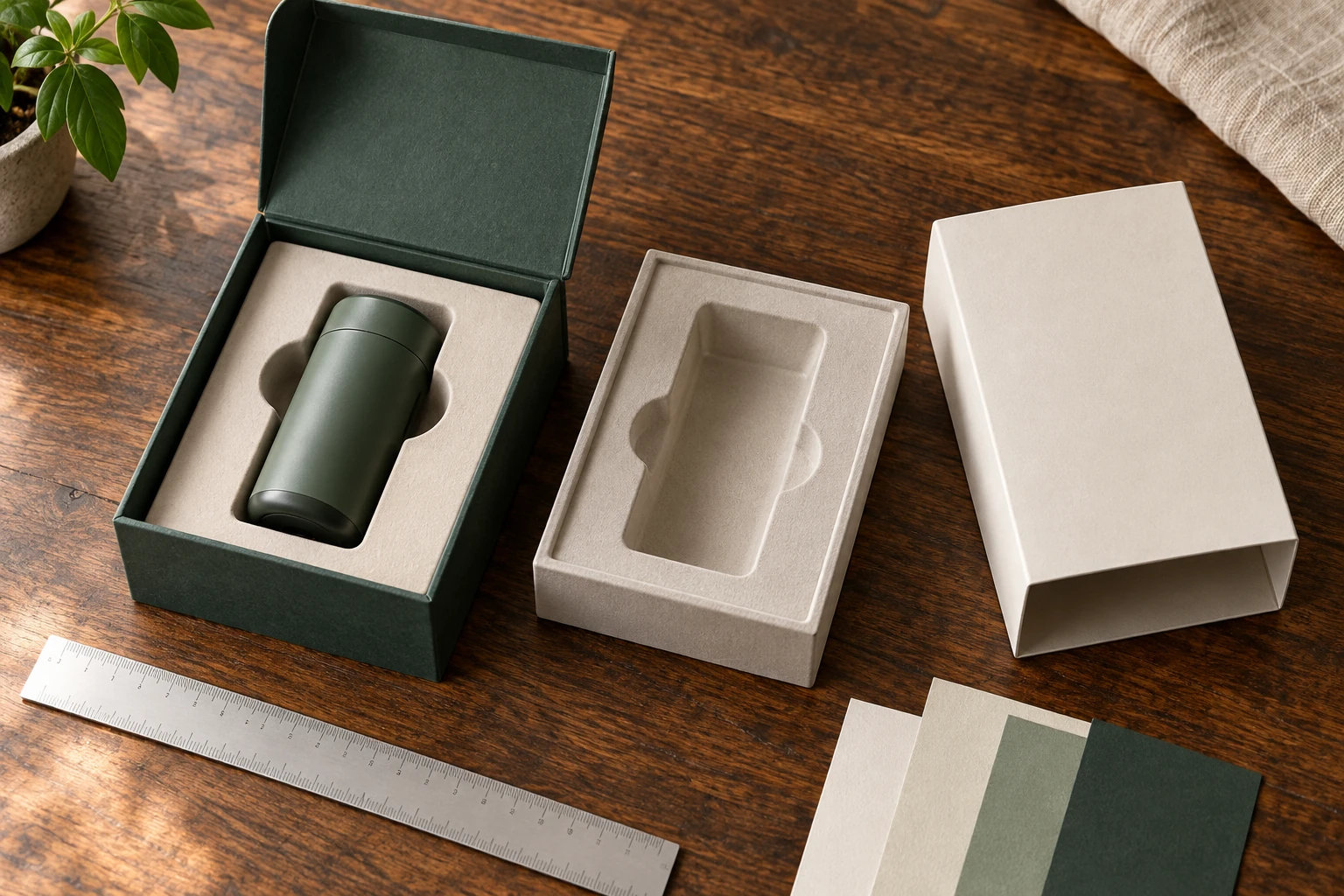
A repeatable comparison record
To decide whether a future edition can use the platform, measure the maximum packed-product envelope in its approved orientation (length × width × height), record the instrument and measurement date, and identify the product revision. Measure the usable internal box space at the corresponding locations; do not compare internal capacity with external carton dimensions. Then record the insert contact locations and any intentional compression or clearance agreed with the packaging engineer. Keep photographs with a ruler for context, but do not use a photo as the only dimensional record.
For the physical review, assemble the production-representative box, install the proposed insert, load the release item and documents, close the box, and repeat the open/remove sequence. Record the sample count and any fit, scuff, closure or handling issue. This is a reproducible buyer-side screening method, not a formal performance standard or evidence that parcel distribution requirements have been met.
What to send for an edition-platform quote
- Product dimensions and weight for each planned edition, including orientation and any included certificate or accessory.
- Preferred base-box format, presentation reference and desired reusable components.
- Which parts may change: insert, sleeve, label, print, finish, booklet or outer shipper.
- Known release quantities or quantity tiers, order cadence and destination country/postcode.
- Artwork/dieline status, sample expectations, target in-hand date and who approves each revision.
- Any shipping route, stacking, storage or retailer requirements that must be considered.
Ask the supplier to quote the base platform and each edition-specific component separately where possible, state tooling ownership/reuse assumptions, and identify what change would trigger a new sample or tooling review. Never assume the sample, MOQ, lead time or price of one structure transfers to another.
Frequently asked questions
Can one rigid box be used for multiple collectible editions?
Potentially, if the product envelope, loading method, insert interface, closure and presentation requirements stay compatible. Verify the changed edition with a representative sample before reusing the base specification.
Should each release get a different insert?
Only when object shape, retention, access or included components require it. A replaceable insert can support variety, but every version still needs its own fit review.
Can the collector box ship by itself?
That depends on the structure, product fragility, destination and distribution handling. A premium presentation box is not automatically an approved shipping container; evaluate the complete parcel pack.
Does a reusable box platform guarantee lower cost?
No. Reuse may avoid some repeated development work, but editions can differ in materials, print, insert, setup, quantity and freight. Compare written quotes for each defined configuration and do not infer savings without supplier data.
Buyer questions were informed by the linked Reddit discussions above. They are anecdotal conversations, not representative research. Recommendations on measurements and version records are a proposed reproducible review method, not factory performance data.
Plan the next edition before the first box is locked.
Share your product envelope, expected editions, preferred rigid-box style and destination. Ask Triya Gift to review a base box plus version-specific insert and sleeve options.
Request a collectible packaging quoteApplicability and limits: This guide is for secondary presentation packaging for non-regulated collectible products. It does not specify primary containment, food-contact compliance, anti-tamper security, certified transit performance, verified production costs, MOQ or lead times. AI images are concepts, not customer projects or manufactured-product photographs.