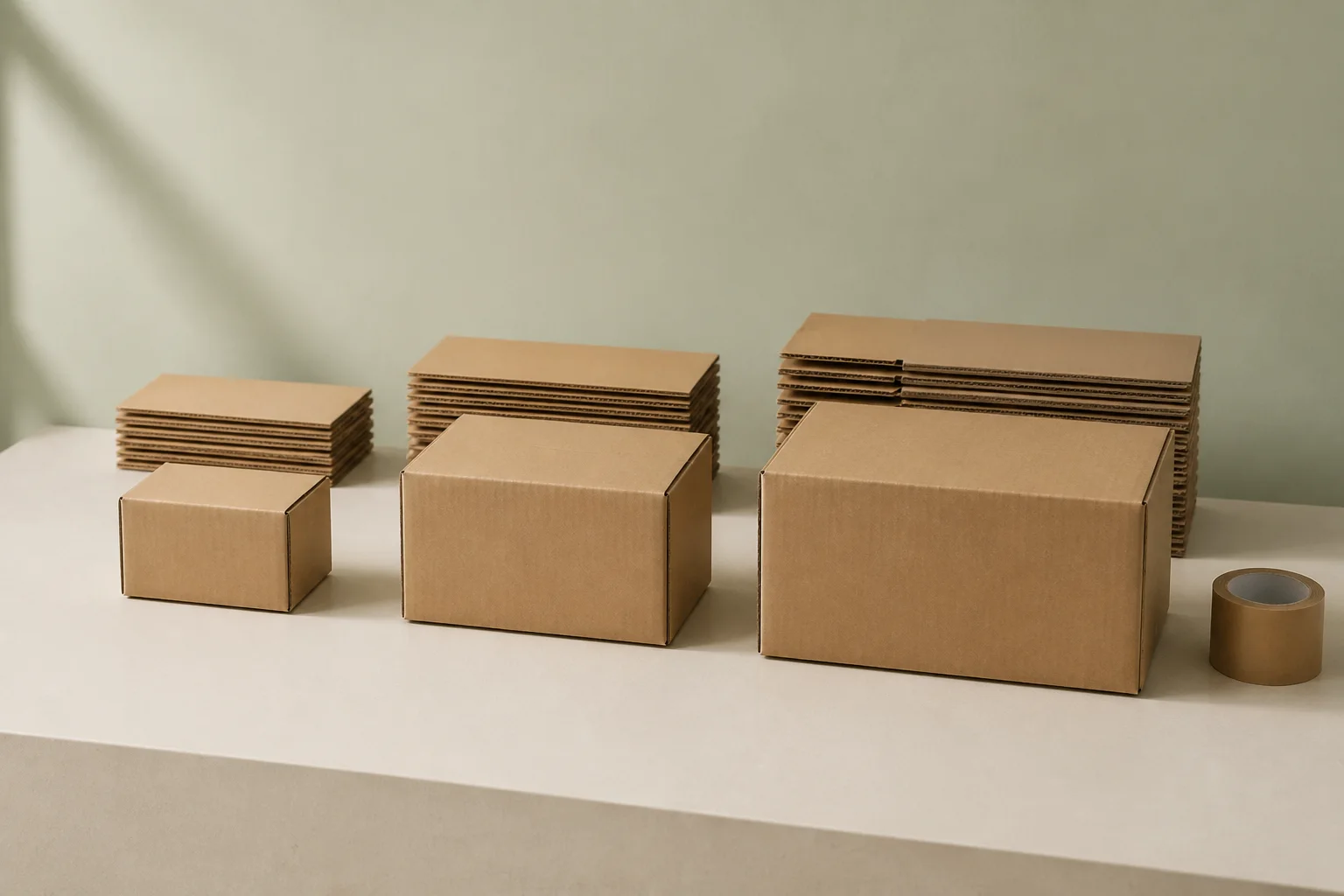
Custom packaging cost depends on a connected specification: size changes material use and freight; structure changes labor and tooling; finishes change setup; inserts change protection and assembly. A supplier can only price accurately when those decisions are defined on the same brief.
How custom packaging cost is built
A quotation usually combines costs that happen once with costs that repeat for every unit. One-time items may include structural design, dielines, cutting dies, print plates, molds and physical samples. Per-unit items include board or paper, printing, lamination, finishing, inserts, assembly and packing.
This is why a low-volume order can have a high unit cost even when the raw paper seems inexpensive. Setup is divided across fewer boxes. At a higher quantity, setup becomes a smaller part of each unit, but material, labor, quality control and freight remain.
The 10 factors that change a packaging quote
| Factor | Why it changes cost | What to specify |
|---|---|---|
| 1. Structure | Rigid boxes, mailers, cartons, tubes and bags use different materials, tooling and assembly. | Preferred format or a reference. |
| 2. Finished size | Larger panels use more material and may reduce sheet yield. | Internal or external L × W × H. |
| 3. Quantity | Setup is spread across the run; machine efficiency changes by volume. | Initial and likely reorder volume. |
| 4. Board and paper | Thickness, stiffness, recycled content and specialty textures vary in cost. | Performance and appearance targets. |
| 5. Print coverage | One-color, CMYK, Pantone and inside printing need different preparation. | Outside, inside and sleeve coverage. |
| 6. Surface finish | Foil, embossing, spot UV and soft-touch add dies, passes and checks. | Each finish and approximate area. |
| 7. Insert | Paperboard, molded pulp, EVA, foam and fabric trays use different tooling. | Product size, weight and fragility. |
| 8. Sampling | White, printed and pre-production samples prove different decisions. | What the sample must validate. |
| 9. Packing | Assembled and flat-packed formats change labor, cartons and freight. | Units per carton and protection. |
| 10. Delivery | Destination, route, timing and Incoterm can outweigh small unit differences. | Country, postal code and target date. |
How to compare custom packaging quotes fairly
Put each quotation beside the same specification. Check dimensions, material thickness, printing, finish, insert, quantity and packing first. Then identify what is included: tooling, samples, artwork support, inspection, cartons, freight, duties and delivery.
A cheaper line may describe lighter board, simpler print, a different insert or an ex-works price with no delivery. If the units are not equivalent, the prices are not comparable.
A fair comparison should show
- Exact style and dimensions
- Board or paper specification
- Printing and finish method
- Insert construction
- Quantity and tolerance
- Tooling and samples
- Carton packing data
- Delivery term
Comparing delivery formats? Use our flat-pack versus assembled gift box cost worksheet to calculate whether freight and storage savings cover local assembly labor.
How to reduce cost without weakening the result
Start by removing unused volume. Right-sizing can reduce paper, insert volume and shipping space together. Keep one high-impact finish instead of combining several decorative processes. Standardizing paper, colors or insert materials across related SKUs can also simplify production.
Do not remove the feature that protects the product only to lower the box price. Damage and replacement costs can erase the saving. Test fit, opening behavior and packing speed on a physical sample.
- Ask for two or three quantity breaks.
- Compare fixed rigid and fold-flat structures when freight matters.
- Use targeted foil or embossing rather than covering large areas.
- Use paperboard inserts for lighter products when they provide enough support.
- Group SKUs around shared materials or dimensions where practical.
The information that produces a useful quote
Share product dimensions and packed weight, not only a visual reference. Explain whether measurements are internal or external. Include destination and date because freight and schedule can change the recommended structure.
Copy this RFQ checklist
- Product and use case
- Product size and weight
- Style or reference
- Finished dimensions
- Order and reorder quantities
- Artwork and colors
- Finish and insert
- Destination and date
If the structure is undecided, say so. A useful response should explain the recommended construction, the minimum order quantity, the right sample and what the quotation includes. Review the custom packaging MOQ guide before choosing quantity breaks.
Custom packaging cost FAQs
Why does custom packaging cost more at low quantities?
Tooling, setup, sampling and machine preparation are spread across fewer units.
What information is needed for an accurate quote?
Provide style, dimensions, quantity, product weight, material, print coverage, finishes, insert, packing, destination and target date.
How should two packaging quotes be compared?
Compare like for like and ask the supplier to identify exclusions.
How can cost be reduced without making the packaging feel cheap?
Prioritize fit and structure, simplify print, use one focal finish, standardize materials and reduce unused volume.
Turn one specification into comparable options
Send your style, dimensions, quantity, finish, insert and destination. Ask for quantity breaks and a clear statement of inclusions.
Request a specification-based quote