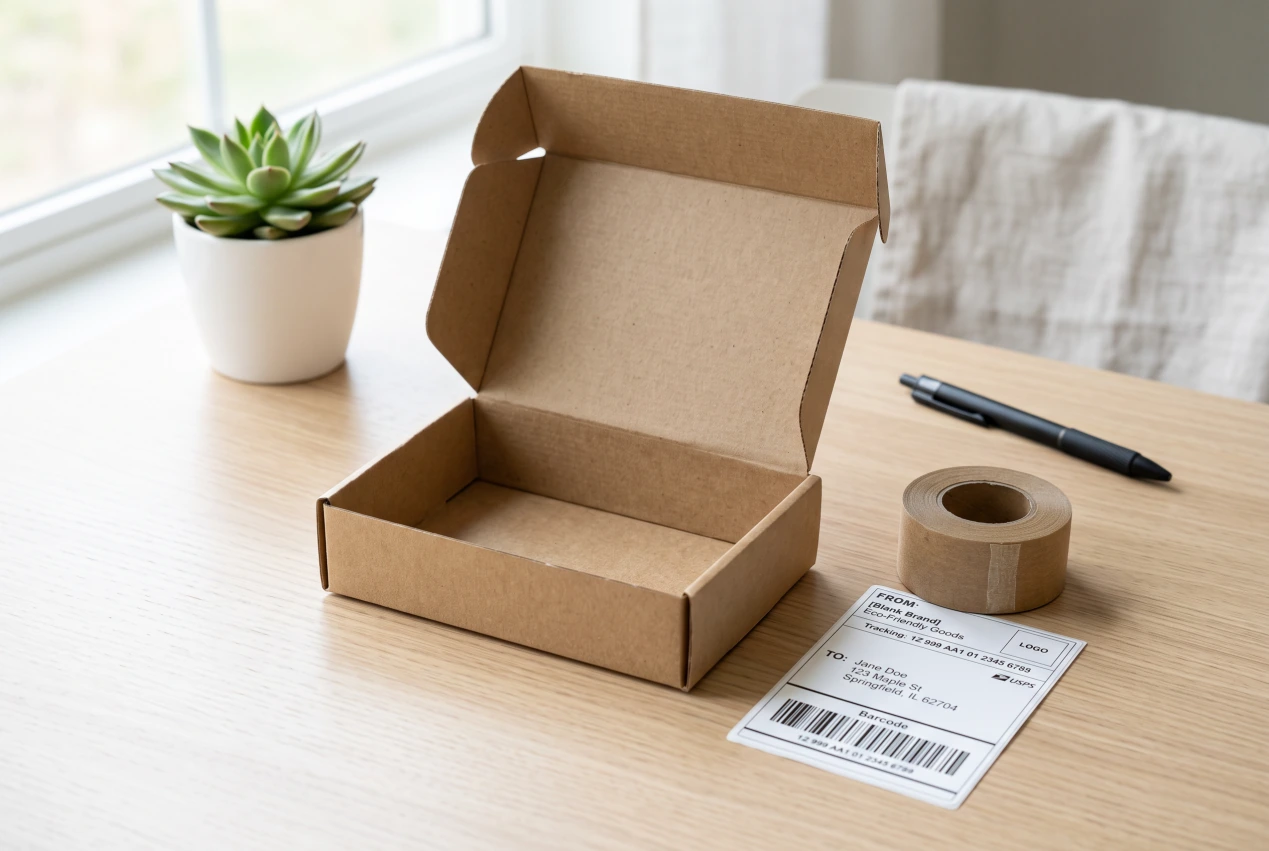
Brands often frame sustainability and premium presentation as competing goals. In practice, both depend on disciplined design. A box feels premium when it fits, opens well, protects the product and uses materials consistently. It becomes more responsible when unnecessary volume and mixed components are removed and when the remaining materials have a clear purpose.
1. Set protection, reduction and recovery in that order
Packaging that allows the product to break is rarely a sustainable outcome. Define the hazards first: weight, fragility, moisture, compression and delivery route. Then right-size the pack and use the least material that can pass the required test. Only after performance is understood should the team compare recycled content, certified fiber, coatings and end-of-life options.
Prevent product loss
Damage can outweigh modest material savings, so validate fit and distribution performance.
Remove excess
Cut unused volume, decorative layers and components that do not improve protection or experience.
Plan the end of life
Prefer materials that are widely understood and easy for customers to separate where local systems accept them.
2. Choose paper and board with evidence
Paper-based packaging can support a premium look through clean construction, tactile stock and restrained printing. If responsible forestry is part of the requirement, specify an accepted chain-of-custody certification and ask the supplier to confirm availability for the quoted material. If recycled content matters, record the percentage and whether it applies to the board, wrap or both.
Ink and adhesive choices should be discussed with the complete production process. Terms such as “soy-based” or “water-based” do not by themselves make a finished box recyclable. Lamination, foil, magnets, foam and mixed inserts can affect recovery. Ask for a component list rather than relying on a single green claim.
3. Replace plastic inserts where the product allows
Molded pulp and folded paperboard inserts can secure many cosmetics, accessories, gift sets and lightweight electronics. Good geometry creates controlled contact points, finger access and clearance from the outer walls. The result can look refined while remaining visibly paper based.
Some heavy, sharp or highly sensitive products may still need foam or another specialist material. Compare protection, surface abrasion, dimensional tolerance, minimum order quantity and recovery route. The lower-impact option is the one that meets the real performance requirement with the simplest material system.

4. Design a credible second life
A durable rigid box may be kept for jewelry, stationery or accessories. Reuse can extend brand visibility and delay disposal, but only when the size, opening and interior make the second use obvious. A box that is too product-specific or difficult to clean is less likely to remain in use.
Do not use “reusable” to justify unnecessary weight or volume. First ask whether a lighter pack could do the job. If a keepsake format is appropriate, remove permanent product-shaped elements where possible or make the insert removable.
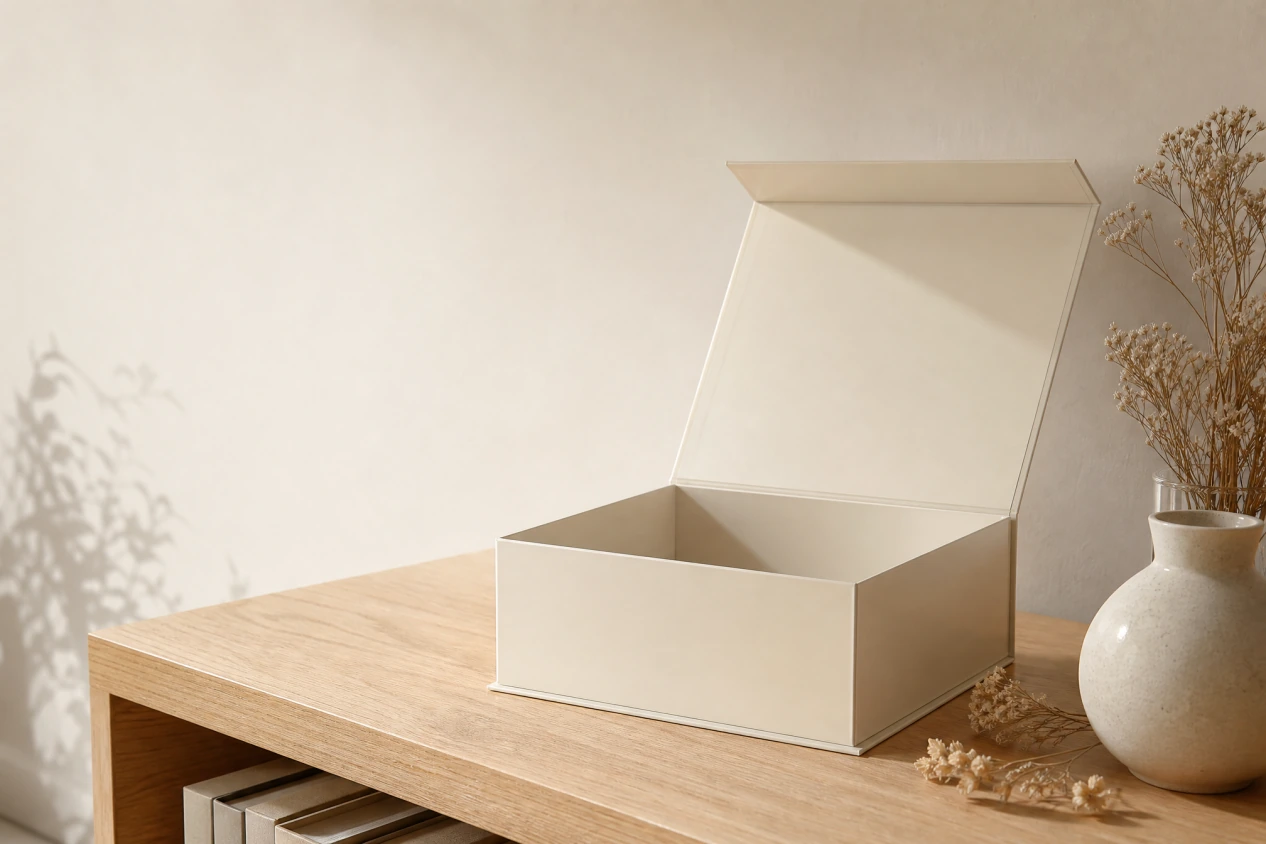
5. Create luxury through restraint
Premium sustainable packaging often benefits from fewer processes. Let paper color and texture carry more of the surface. Use a small foil or embossed mark as a focal point instead of full coverage. Consider whether a film lamination is necessary for handling, or whether a suitable coating or uncoated stock can meet the brief.
Sampling remains essential. Recycled and uncoated papers can vary in shade and absorb ink differently. Approve color, rub resistance, fold quality and finish registration on the selected stock. If color is critical, read our Pantone vs CMYK packaging color guide.
6. Make environmental claims specific and useful
Record these details in the brief
- Finished dimensions and packed weight
- Board and wrap material
- Certified or recycled-content requirement
- Insert material and removal method
- Ink, coating and lamination
- Foil, magnet, ribbon and adhesive
- Expected recovery route
- Markets where the pack will be sold
- Evidence supporting each claim
- Sample and test requirements
Prefer language such as “paperboard box with a removable molded pulp insert” over an undefined “100% eco-friendly” claim. Requirements and collection systems vary by region, so customer guidance should be reviewed for the actual sales market.
Frequently asked questions
Can luxury packaging be plastic free?
Many paper-based boxes and molded pulp or folded paperboard inserts can avoid plastic, but product performance, coatings, adhesives, magnets and decorative elements must all be reviewed.
Is FSC-certified packaging recyclable?
Certification addresses fiber sourcing, not the recyclability of the complete pack. Coatings, films, adhesives and mixed components still need to be considered.
Does a reusable rigid box count as sustainable?
Reuse can be valuable when customers are likely to keep the box, but it should not replace right-sizing and material reduction. Avoid making a universal impact claim without evidence.
Material planning
Build a premium pack with a clearer material story.
Share your product, destination market, protection needs and environmental priorities. Triya Gift can compare paper, inserts, finishes and structures before sampling.
Discuss sustainable options