ECOMMERCE / THE RETURN JOURNEY
Design for the
second trip.
Return-ready custom mailer boxes: an opening, repacking and resealing checklist.
THE SHORT ANSWER
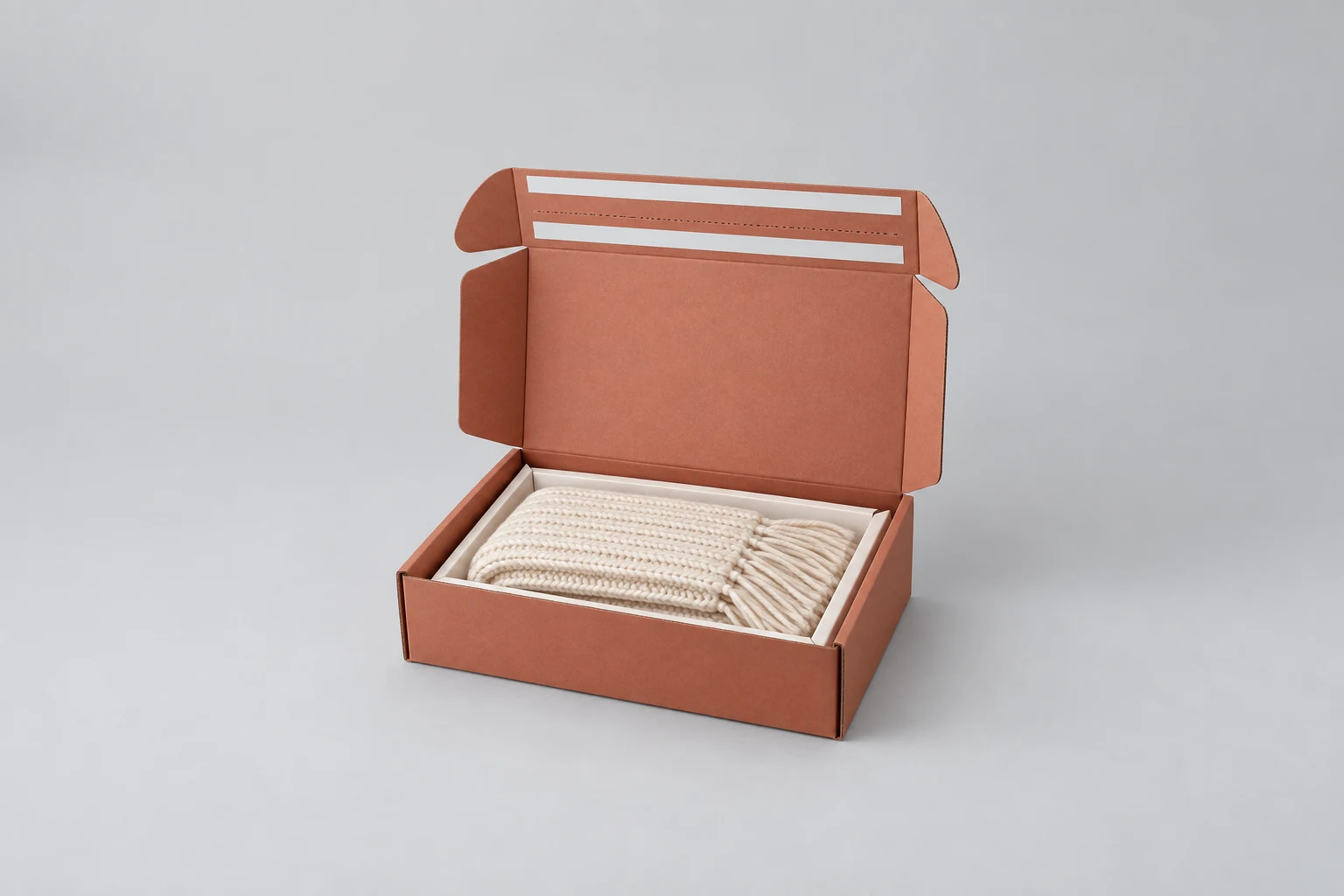
A return-ready custom mailer needs more than a second adhesive strip. The customer must open it without destroying the return closure, retain the protective components, repack the item correctly and attach a clear return label. Specify these actions together, then evaluate the same pack after an outbound journey and a return. Confirm the closure, product fit and carrier requirements before approving production.
The small detail customers notice.
In a 2026 Reddit resale discussion, a buyer described useful second adhesive strips—and another reported that the return strip had already been used by the sender. In a separate clothing-rental discussion, the business owner worried about customers having to find their own return packaging. These are qualitative observations, not a market survey: the practical gap is a return route that still works after the first opening.
Return-ready means a pack designed and checked for an intended return journey. Resealable describes a closure feature; it does not prove that the board, insert or contents can withstand another trip. Reusable needs a defined use case and evidence, not just a printed claim.
OPEN WITHOUT LOSING THE RETURN
Give each seal one job.
Separate the outbound seal, opening feature and return closure on the drawing. Ask the manufacturer to demonstrate the sequence on a physical sample. Opening must not remove the panel needed for resealing, and the unused adhesive should remain protected until the return is packed.
FedEx describes two adhesive strips on its own reusable packaging: one for the sender and one for later use. That illustrates the sequence, not approval of a custom box or proof that Triya Gift stocks that construction. Confirm custom feature availability, tooling and sealing requirements in your quotation.
| Route | What the customer does | What to verify |
|---|---|---|
| Second adhesive strip | Peels the unused liner and presses the closure | Liner survives opening; actual board and finish bond; usable sealing land remains |
| Tape-reclosed mailer | Refolds the box and applies suitable tape | Instructions identify seams; customer has tape; flaps remain intact |
| Replacement shipper | Packs the retained inner box inside a new outer | Clear replacement route when the original outer is damaged or no longer fits |
Make warehouse work instructions match the sample. The first packer must not use both seals “for extra security” if one is reserved for the customer. Extra closure material should follow the approved specification and carrier guidance.
KEEP THE PROTECTION UNDERSTANDABLE
Can someone rebuild the pack?
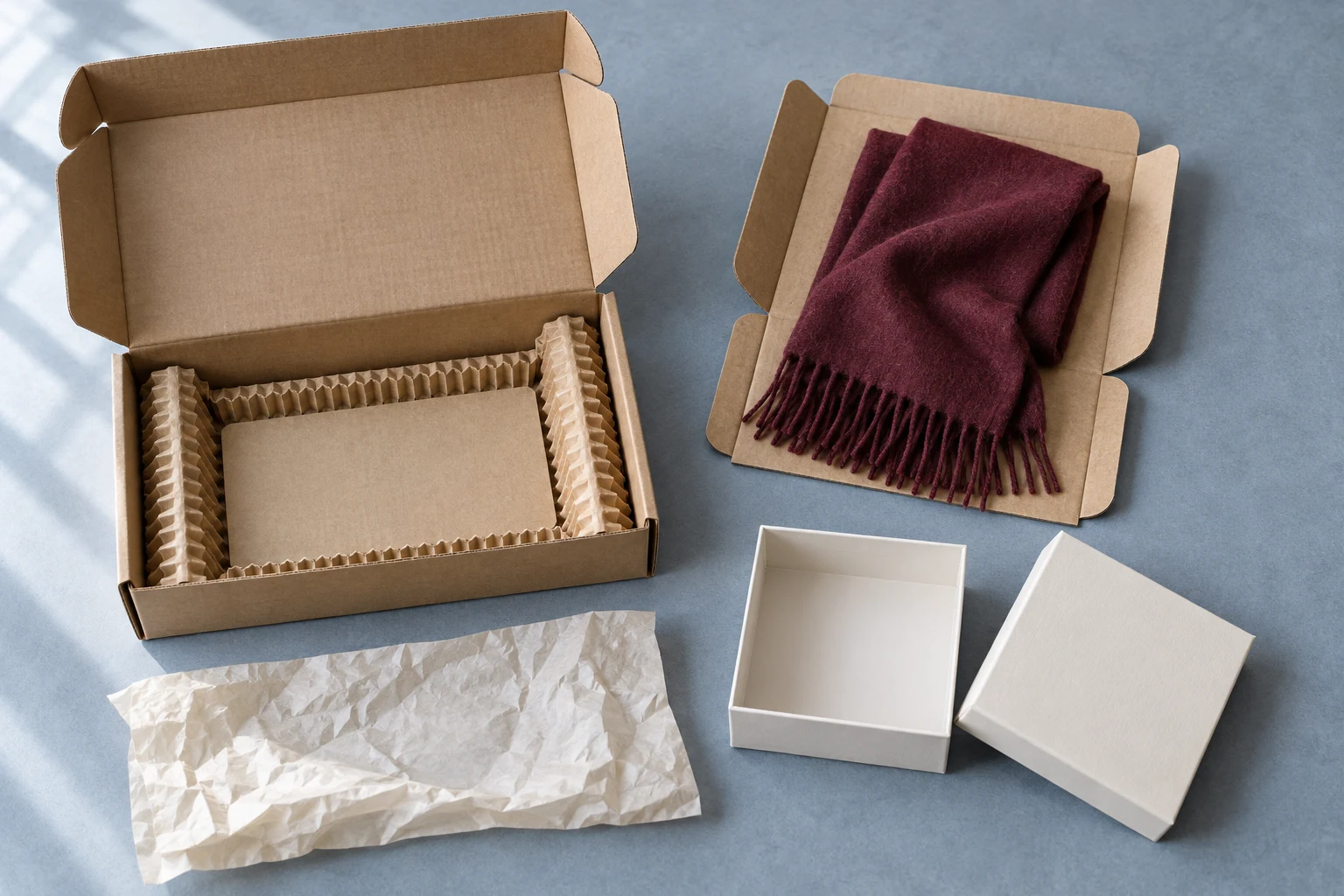
Retain only components with a defined job. A customer may discard loose filler or decorative tissue before deciding to return an item. Make essential inserts easy to recognize, remove and put back; do not assume the original packing operator will perform the return.
- Show the product orientation and the position of accessories with a simple packing reference.
- Check that the insert can be removed without tearing tabs needed to secure it again.
- Trial the product after normal handling: a scarf folded differently may occupy more space.
- For assortments, test a partial return if your policy allows one. Missing items can leave unsupported spaces.
- Tell customers what to do when an insert is missing or the box is wet, torn or crushed.
A magnetic rigid gift box can provide the presentation layer inside an appropriate shipper. Its magnetic closure is not a parcel-shipping seal. A custom mailer box is the outer-format starting point; the actual board, fit and closure still require project-specific review. See our insert material guide for retention choices.
RECLOSE AND RELABEL
Leave a clean return route.
Reserve enough usable surface for the return label without covering the opening feature or relying on a badly creased panel. Follow the selected carrier's label and sealing instructions. UPS's return guidance calls for a sturdy box and removal of old shipping labels when reusing one. The physical sample should demonstrate that task too.
Keep packaging instructions separate from your return policy. A return-capable box does not mean every product is eligible for return, or that postage is prepaid. State how a customer obtains authorization and the correct label through your existing service process.
If the outbound box arrives damaged, do not instruct the customer to force it through a second trip. Define a replacement-packaging or support path before launch. Avoid a blanket “reuse this box” message without a condition check.
04 / THE TWO-TRIP TRIAL
Measure the return, not just the unboxing.
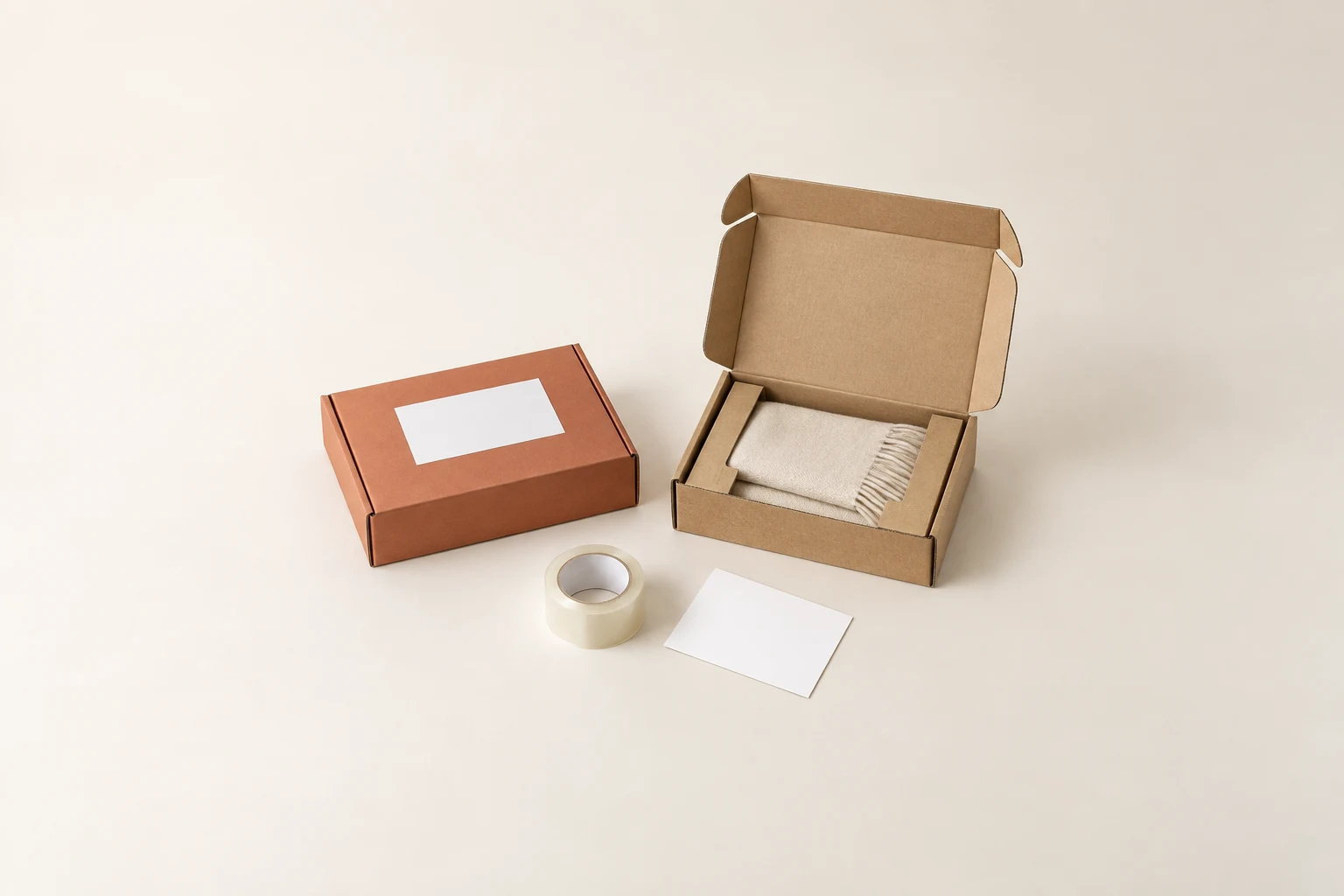
This is a proposed buyer trial, not a published Triya Gift test result or a substitute for laboratory transit testing. Agree sample count, product variants, route conditions and pass criteria with the packaging specialist before collecting data.
- Record the starting pack. Identify product SKU, box and insert revision, packed weight, dimensions, closure materials and clear photographs.
- Use the intended outbound route. Record conditions and arrival damage. Do not replace the outer or insert silently between legs.
- Ask an unfamiliar user to unpack and repack. Provide only the instructions a real customer receives. Record assistance, missing components, resealing attempts and elapsed time.
- Run the intended return leg. Use the reclosed sample and agreed service, with the correct return label. Inspect contents and packaging on receipt.
- Review failures by stage. Distinguish opening damage, repacking error, seal release, label confusion and transit damage before changing the design.
| Measure | How to record it | Decision it supports |
|---|---|---|
| Unassisted completion | Count users completing the specified sequence without help; retain total attempted | Instruction and closure usability |
| Repacking time | Use consistent start and stop points; retain every observation and exceptions | Comparison of trial variants, not a promised customer time |
| Closure and contents condition | Before/after photos, defect description and predefined acceptance criteria | Whether the same pack remained suitable for the second trip |
| Replacement materials | Log new tape, insert or outer required and why | Real return-system resource use |
Report results with the sample count and conditions. A small successful trial cannot establish a universal damage rate, environmental benefit or unlimited reuse claim. Keep the approved trial record with the packaging sample approval.
Before you order.
Does a tear strip make a box return-ready?
No. It helps opening only if its path preserves the structure and future closure. Trial the opening sequence, retained protection and resealing together.
Is a second adhesive strip always better than tape?
Not automatically. It can remove the need for customer-supplied tape, but adhesive compatibility, shelf life, user handling and carrier requirements still need confirmation. Compare prototypes using the same return task.
Can this replace reusable rental bags?
This guide addresses an intended return trip for paper-based packs, not many-cycle rental logistics. A repeated rental loop needs its own durability, cleaning, inspection and replacement system.
Will return-ready packaging reduce total cost?
Measure it. Compare packaging, replacement materials, customer support and return handling under the same assumptions. No cost reduction is established by this guide.
BRIEF TRIYA GIFT
Show us the journey
in both directions.
Send product dimensions and weight, quantities, destination, current packing photos, return eligibility, expected storage time and the proposed closure route. Ask us to assess the mailer, insert and sample options; confirm any specialist closure feature and its availability before ordering.
Request a mailer packaging review ↗