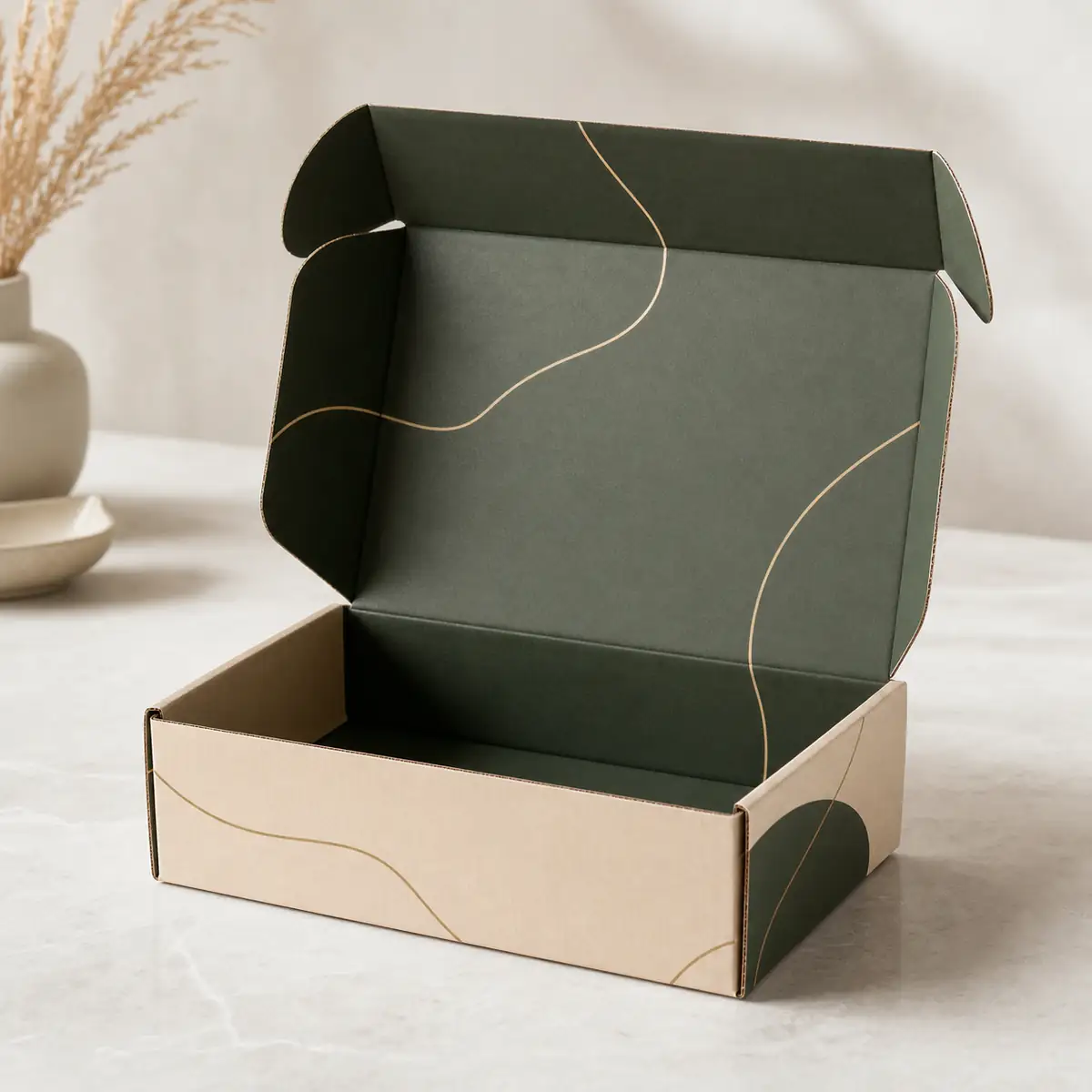
Small businesses rarely struggle to imagine attractive packaging. The hard part is deciding how much to buy before demand, product dimensions and brand artwork are fully stable. The best custom packaging for a small business is therefore not always the most elaborate box. It is the option that protects the product, fits the current stage of the business and leaves room to learn.
That tension appears repeatedly in ecommerce and packaging communities: founders want a polished unboxing, but the minimum order, short-run unit price and shipping bill can consume cash needed for inventory or customer acquisition. A staged packaging plan solves the problem more reliably than chasing a supplier who promises the lowest number.
What does low-MOQ custom packaging actually mean?
MOQ means minimum order quantity. There is no single number that qualifies as low MOQ custom packaging. A run that is small for a printed corrugated mailer may be impractical for a handmade rigid box, while a stock-size carton with a custom label may be available in much smaller quantities.
Minimums exist because production includes fixed work before the first usable box is made: structural design, dielines, cutting tools, print setup, color checks, lamination, finishing and machine changeovers. Those costs must be spread across the order. Fewer boxes normally mean a higher cost per piece even when the total order value is lower.
Print method matters too. Digital printing can remove plates and make short runs easier to test. Offset printing is often attractive at larger volumes or when color and finish requirements justify the setup. A supplier may also offer a stock structure with custom print, which sits between a plain box and a completely new box design.
Four ways to start custom packaging at a small scale
| Route | Best when | Main tradeoff |
|---|---|---|
| Stock box + branding | You are validating the product or still changing sizes. | Lowest commitment, but limited structural control. |
| Semi-custom packaging | A stock size works and you want a sleeve, insert, tape or printed surface. | More branded, but still constrained by existing dimensions. |
| Digital short run | You need small-batch custom packaging for a launch, campaign or market test. | Lower setup risk, usually higher unit cost. |
| Fully custom production | Size, sales velocity and artwork are stable enough to support tooling and inventory. | Best control and volume economics, highest commitment. |
1. Stock boxes with stickers, stamps or custom tape
This is not a temporary-looking solution when the system is designed deliberately. Choose one box color, keep label placement consistent and use an insert card or tissue color that supports the brand. Stock boxes are easy to replace when a product changes and allow different SKUs to share the same shipping format.
2. Semi-custom packaging
A printed sleeve, belly band, paper insert, thank-you card or branded tape can create a coherent unboxing without a new box structure. Semi-custom packaging is especially useful when one standard box can serve several products or seasonal designs. Only the visible printed component changes, so the base inventory remains usable.
3. Digitally printed short runs
Ask suppliers specifically about digital printing for packaging and stock-size structures. It can be a sensible bridge when you want custom mailer boxes but cannot yet justify the setup and quantity of a larger production method. Use the run as a controlled test: measure customer feedback, packing time, damage and reorders rather than treating it as the final system.
4. Fully custom boxes
A custom structure becomes valuable when it removes excess space, improves protection, speeds packing or creates a presentation important to the price point. Premium gift sets, cosmetics, jewelry and launch kits may justify rigid presentation boxes. Products traveling through parcel networks may need a corrugated mailer box or a protective outer carton even when the retail box is premium.
Choose the box for the job, not only the unboxing
Separate the product package from the shipping package. A beautiful folding carton or rigid gift box may present the product, while an outer corrugated carton handles labels, rain, sorting equipment and impact. Asking one lightweight decorative box to do both jobs can lead to crushed corners and an expensive customer experience.
Before requesting custom boxes for a small business, define these four requirements:
- Product protection: packed weight, fragility, movement, moisture sensitivity and surface risk.
- Route: retail shelf, local delivery, subscription shipment, parcel carrier, pallet or export freight.
- Packing operation: assembly time, tape, filler, storage space and the skill required for a consistent result.
- Customer moment: easy opening, product reveal, instructions, returns and whether the box is likely to be kept.
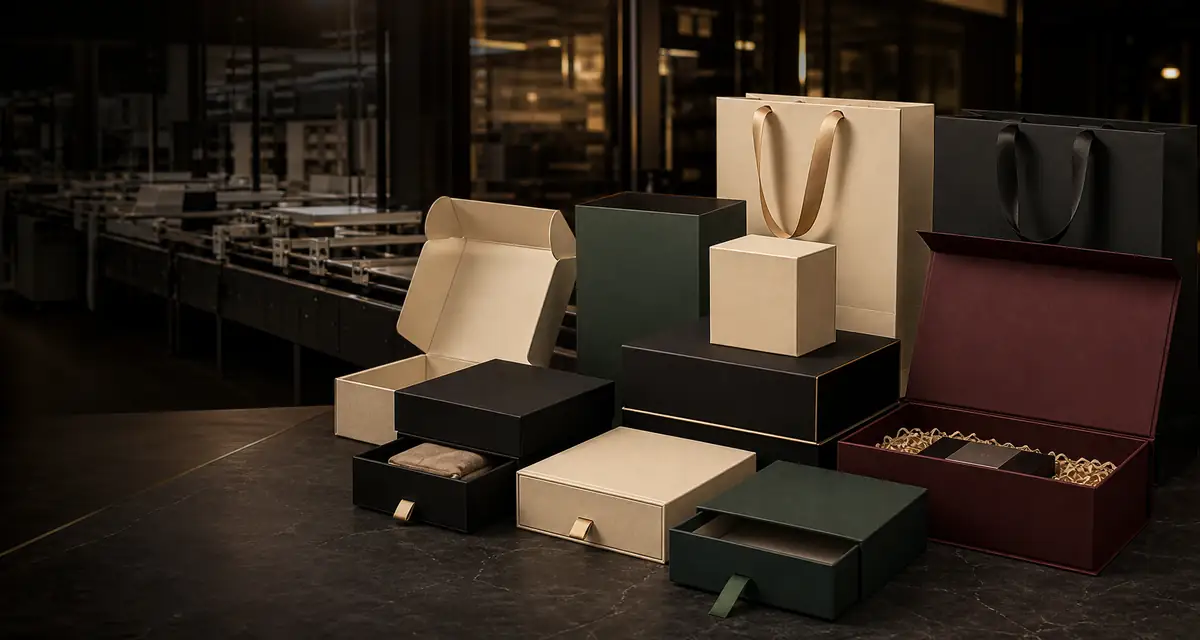
Why small-batch custom packaging costs more
The unit price of a box is only one part of custom packaging cost. A smaller run spreads setup across fewer pieces. A large or assembled box occupies more space in storage and freight. An insert can reduce damage but adds tooling, material and packing steps. Premium finishes may require extra passes, handwork or quality checks.
Build a simple total-cost model:
- Add design, dieline, tooling, proof and sample charges.
- Add production cost for the exact quantity and expected waste allowance.
- Add export packing, freight, duties or taxes, delivery and any local handling.
- Add storage, assembly labor, tape, labels, void fill and the outer shipping carton.
- Estimate the cost of damage, rework and obsolete packaging if the product changes.
Then divide by the number of usable packed orders—not simply the number of boxes produced. This turns an attractive unit quote into a realistic cost per shipment.
How to compare custom packaging quotes fairly
Supplier quotes are comparable only when the specification and delivery basis match. A difference may come from board thickness, recycled content, print coverage, surface paper, finish, insert density, packing method or freight—not simply supplier margin.
Send every supplier the same brief
- Internal box dimensions
- Packed product weight
- Box style or reference
- Material and board grade
- Insert material and fit
- Print colors and coverage
- Finish and special effects
- Quantity tiers
- Assembled or flat packing
- Carton quantity and weight
- Delivery term and destination
- Sample and production timing
Ask which items are one-time charges and which repeat on every order. Confirm whether the quoted dimensions are internal or external. Request carton dimensions because packaging is often bulky relative to its value, making freight and storage decisive. If importing, state the named destination and delivery term in writing so it is clear where cost and risk transfer.
Always test a custom packaging sample before production
A screen rendering can confirm layout, but it cannot prove fit, opening force, board stiffness, color under real light or the way an insert releases the product. A blank structural sample is useful for dimensions and assembly. A digitally printed prototype can check artwork position and the overall impression. A production-equivalent sample is more appropriate when exact finish or material behavior is critical.
Test the sample with the real product and every accessory:
- Pack and unpack it several times, using the people who will fulfill orders.
- Check movement, pressure points, finger access, pull ribbons and removal force.
- Apply the real shipping label and verify that barcodes sit on a flat, readable surface.
- Condition and handle it for the expected route; conduct appropriate drop, compression and vibration tests when damage risk is meaningful.
- Photograph the approved sample and record dimensions, materials, color references and finish in the purchase specification.
For inserts, compare protection and end-of-life goals together. Paperboard, corrugated, molded pulp, foam and thermoformed trays behave differently under weight, humidity and repeated handling. Review custom materials, inserts and finishes, then test the selected combination instead of relying on appearance alone.
When should a small business upgrade to fully custom packaging?
Move beyond a stock or semi-custom system when the decision is supported by operating evidence. Useful signals include stable product dimensions, repeatable monthly demand, few artwork changes, enough storage, a measurable damage problem, slow packing caused by the current box, or a premium presentation that supports the product's position.
A simple stage gate keeps the commitment disciplined:
- Validate: use stock packaging and lightweight branding while confirming product-market fit.
- Standardize: reduce the number of box sizes and document the packing method.
- Test: run a small-batch custom packaging pilot and measure total cost, damage and feedback.
- Scale: commit to tooling or a larger run only when demand and the specification are stable.
The goal is not to stay basic forever. It is to spend in the right sequence. Good packaging should reduce risk or add value at the stage when the business can capture that value.
Frequently asked questions
What is a typical MOQ for custom packaging?
There is no universal packaging MOQ. Structure, size, material, print method, finish and supplier equipment all matter. Digital print and stock-size structures usually allow smaller runs than a new offset-printed structure with custom tooling.
How can I get custom boxes with a low MOQ?
Start with a stock-size box and customize the visible parts with labels, a stamp, sleeve, insert card or tape. If printing on the box is essential, ask about digital short runs and semi-custom options before commissioning a new structure.
How much does custom packaging cost for a small business?
There is no useful universal price because dimensions, material, print, finish, insert, quantity and freight change the result. Compare total landed and fulfillment cost using one consistent specification.
Should I use a mailer box or a rigid box?
Use a corrugated mailer when parcel protection, flat storage and fast assembly are the priorities. Use a rigid box when presentation, gifting and reuse matter more. A rigid box may still require an outer shipping carton.
What information is needed for a custom packaging quote?
Provide product and internal box dimensions, packed weight, box style, materials, insert, print and finish, quantity tiers, packing method, destination, target date and any testing or compliance requirements.
Ready for a clearer quote?
Turn the idea into one comparable packaging specification.
Share your product size, weight, quantity, destination and reference images. The Triya Gift team can recommend a practical structure, sample route and production plan.
Start your packaging briefChoose a structure or ask for a recommendation
Compare suitable styles, then share your product, estimated quantity and delivery country. Dimensions and artwork can follow.