Specialty packaging,
shaped around your product.

A round container. A sleeve that fits an existing carton. A carry bag for an entire set. Start with what your packaging needs to do, then find the format that fits.

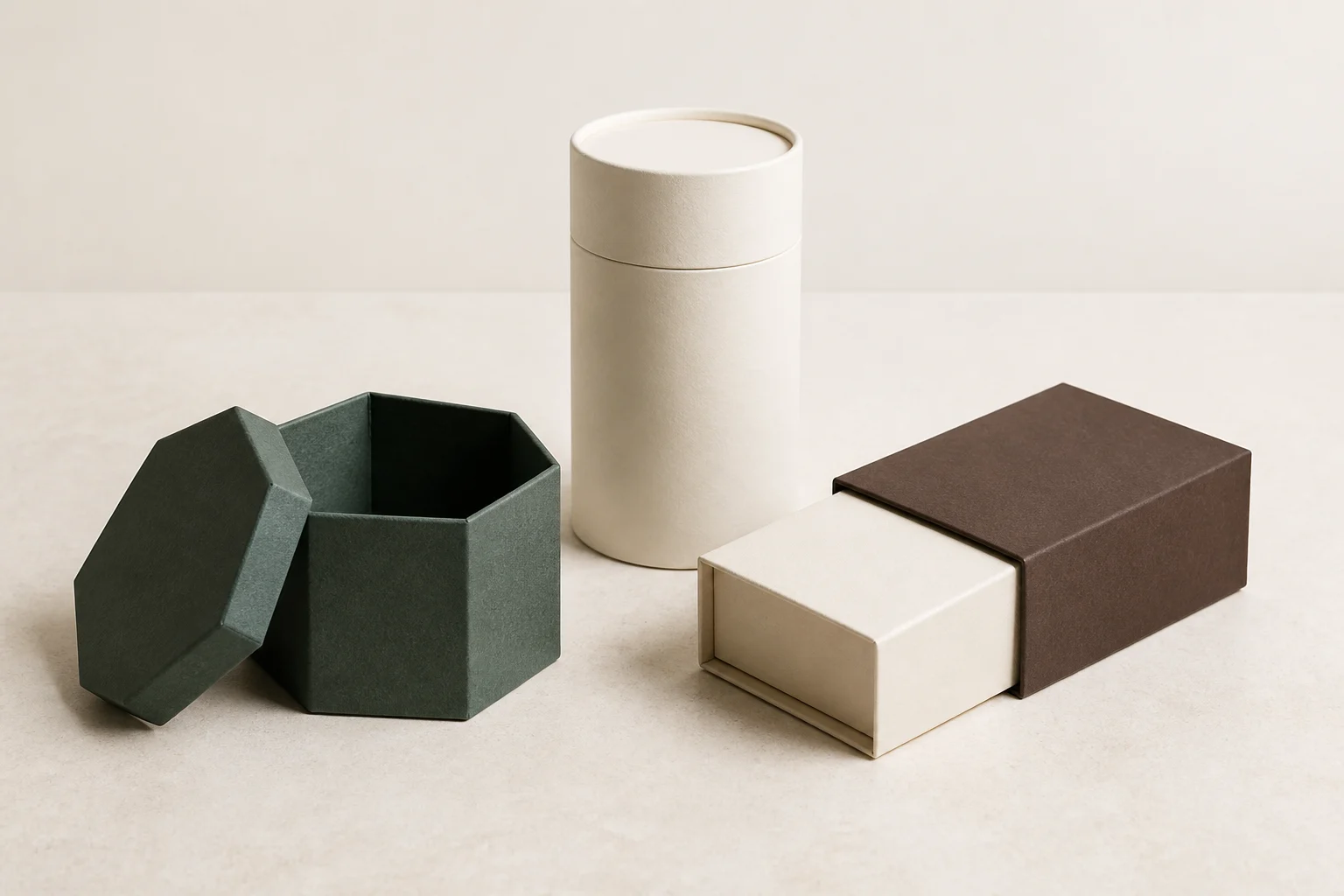
Open green polygonal box, cream paper tube and brown sleeve around a cream pack

Different formats.
Different fit decisions.

These options address needs outside the six core box structures. Use the measurements and review points below to describe the format you have in mind.

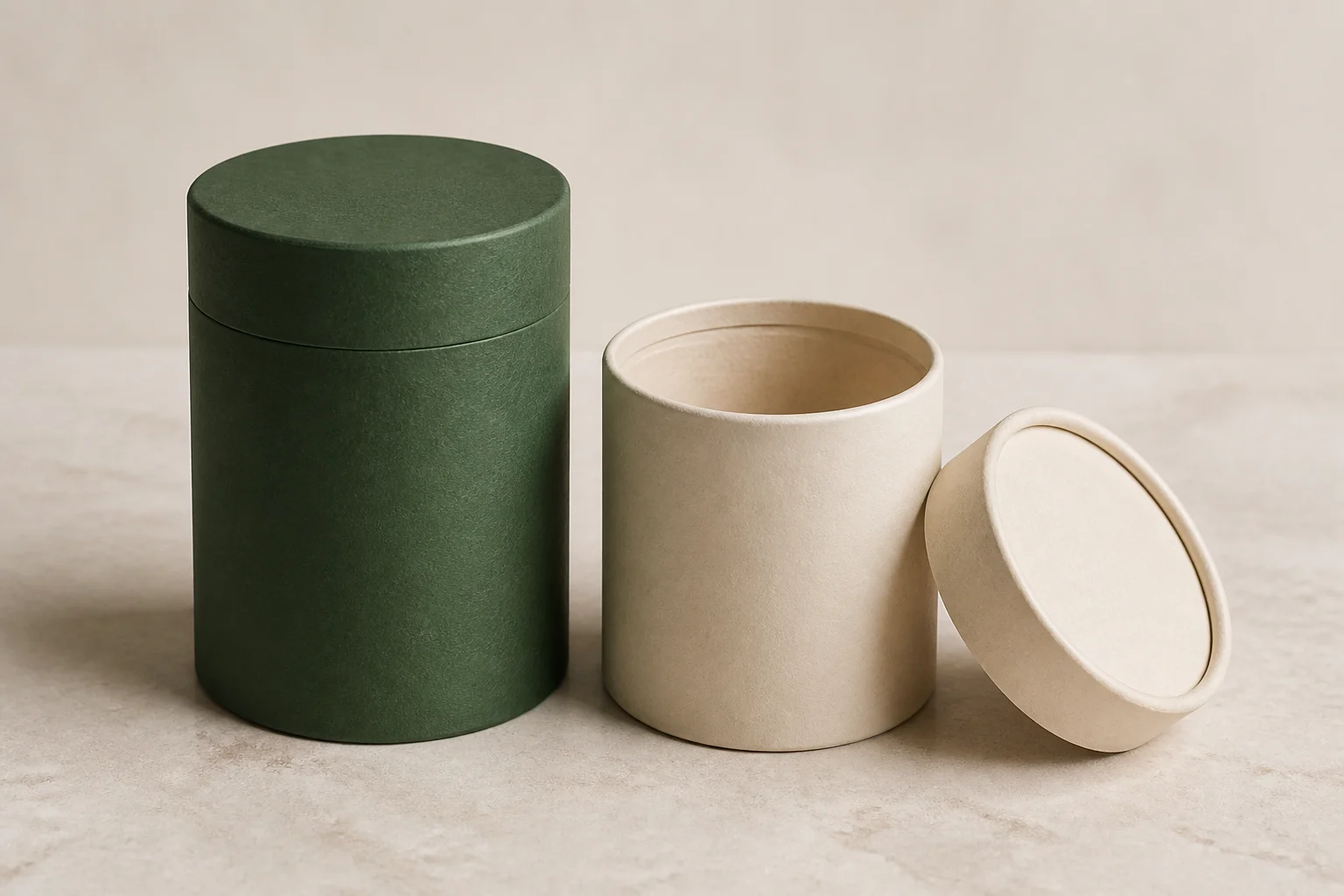
Closed green paper tube beside an open cream paper tube and its separate round lid

Custom paper tube packaging

A cylindrical presentation for round products or an alternative to a rectangular outer box. The key question is how the item enters, sits inside and comes out.

Measure
The widest part of the item, its full height and its weight, including caps or protruding details.
Define
Usable internal diameter and depth separately from the outside tube dimensions and lid height.
Review
Lid engagement, product movement and finger access. A visual match does not confirm a comfortable fit.
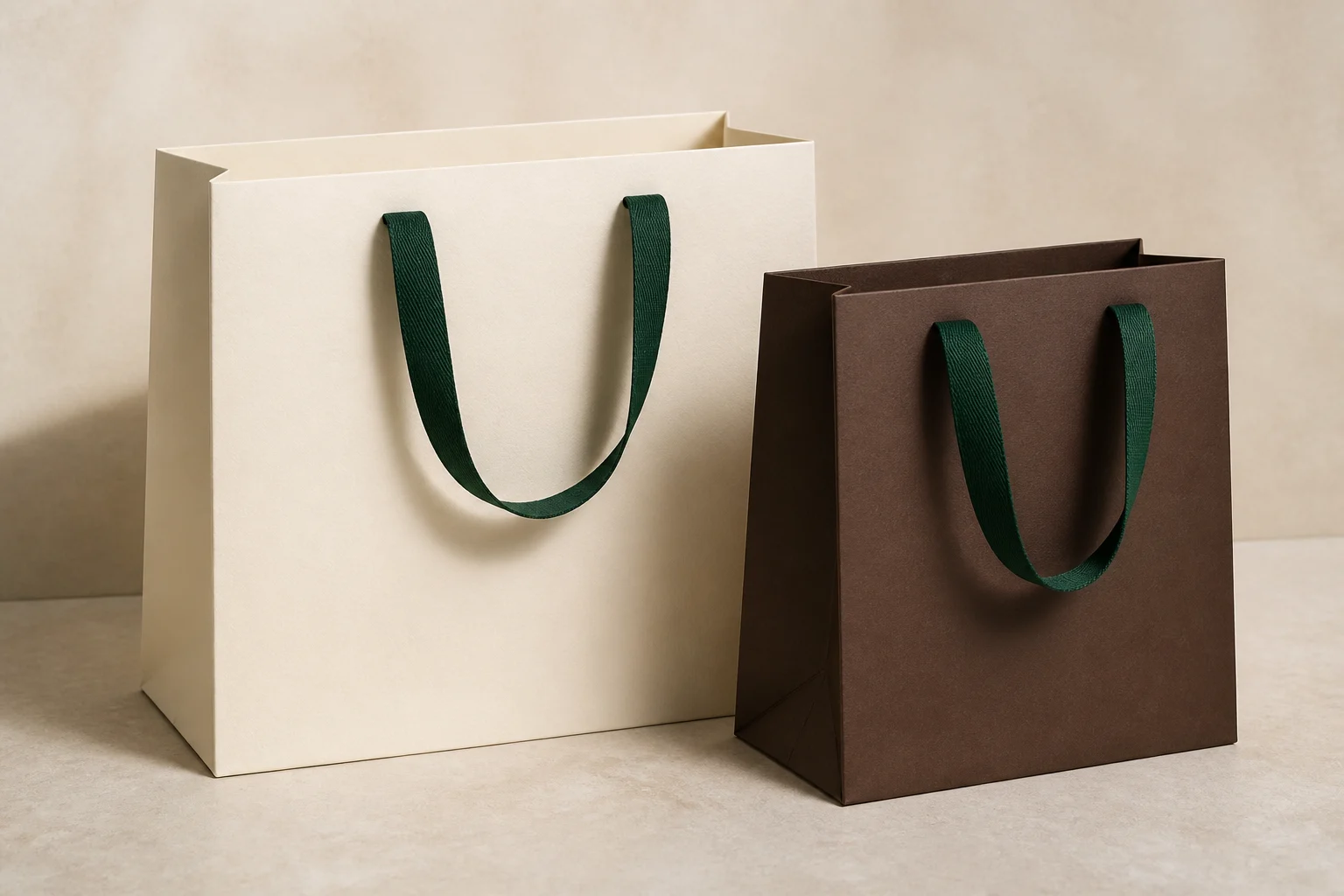
Cream and brown paper shopping bags with green ribbon handles and visible side gussets

Paper bags sized to the set

Design the carry bag around the finished package, not just the loose product. A single gift box and a group of boxes need different loading space.

Measure
The complete packed set in its intended carrying position, including any tissue or protective wrap.
Define
Bag width, gusset depth and body height, with handle clearance considered separately.
Review
Whether the set passes through the opening, rests evenly on the base and leaves enough room to grip the handles.

Packaging sleeves
& belly bands.

A separate wrap can introduce a new edition or group products without replacing the entire package. Decide what stays visible, where the seam sits and how the wrap is removed.

A belly band covers a narrower strip; a sleeve can cover more of the pack. Neither should be assumed to provide the protection of a complete outer box.

Start with the assembled pack
Use its actual outside measurements, including any raised details. Do not size the sleeve from a flat artwork file alone.
Choose the opening direction
Identify which end slides off and which product information must remain visible when the sleeve is in place.
Agree the fit
Review sliding clearance and seam position on the finished pack. A wrap that looks neat must also work on the packing line.

Custom-shaped boxes.

A polygonal outline, an extra-tall profile or an asymmetric footprint changes more than the silhouette. Describe the shape in relation to the product and the space where it will be displayed.

  • Mark the widest points. Include handles, corners and projecting parts, not only a central length and width.
  • Show the opening path. Identify which part lifts, unfolds or separates, and what space it needs around the pack.
  • Note fixed boundaries. Share shelf dimensions or an existing shipping carton if the outer footprint cannot change.

Multi-item presentation sets.

When one package holds several products, the layout starts with the assortment. A visually balanced arrangement also needs a clear loading and removal sequence.

  • Map every component. List each item, its quantity per set and the position it should occupy.
  • Separate fixed and variable items. Note which pieces change between editions so the layout can be reviewed across versions.
  • Define the handover. Specify whether you need empty packaging components or want assembly and packing included in the quotation.

Four more ways
to package an idea.

Curved ends, a built-in handle, a pointed silhouette or a portable case: each changes how the package is used. These are formats to discuss, with feasibility and dimensions reviewed for your contents.

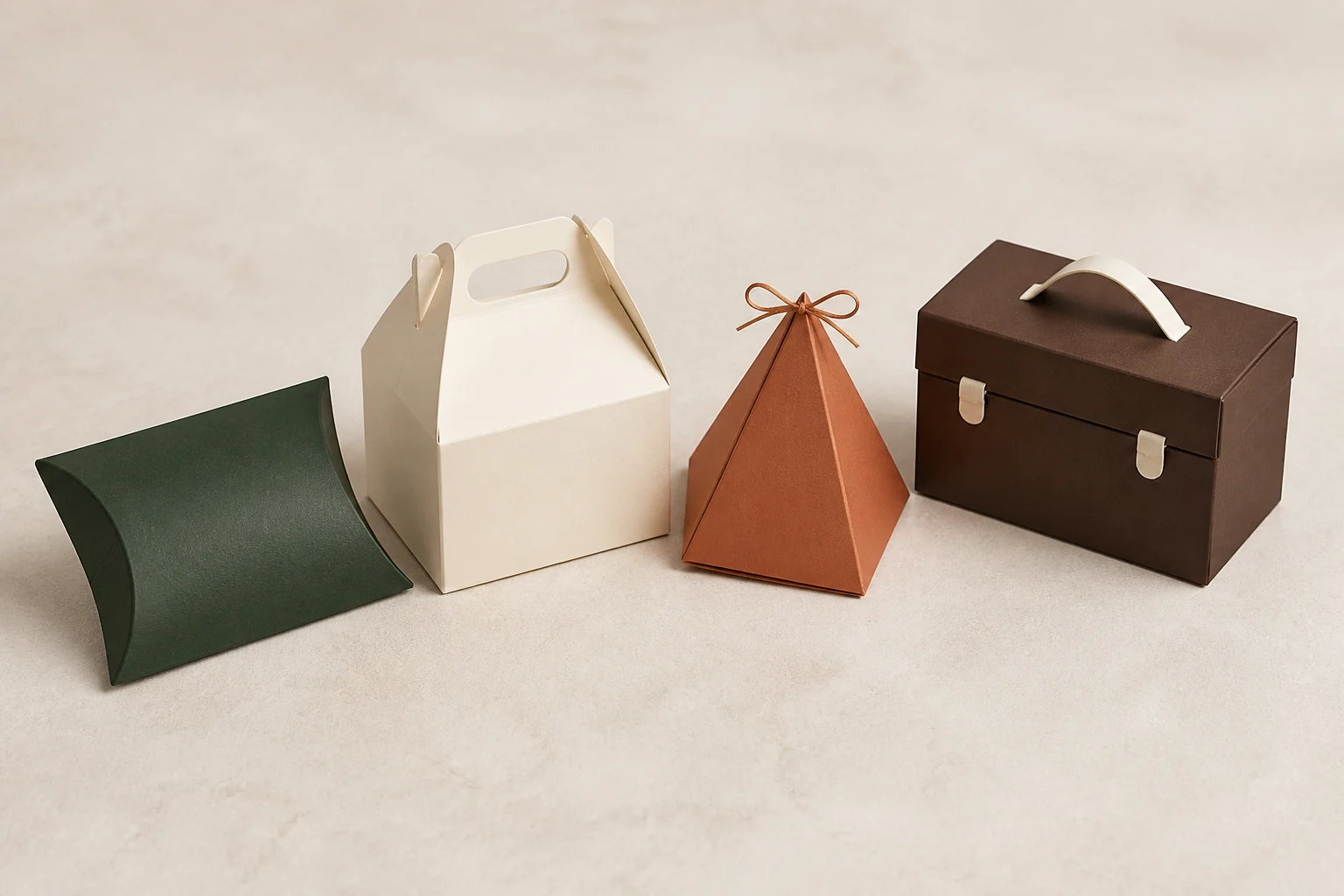
Left to right: green pillow box, cream gable handle box, terracotta pyramid box and brown suitcase-style gift box

Custom pillow boxes

A gently curved paperboard body with folded end flaps creates a soft, compact outline without a separate lid.

Consider for
Small accessories, wrapped keepsakes and lightweight promotional gifts where a compact handover matters.
Design check
The curved ends reduce usable space. Review the thickest part of the item against the closed shape, and add support if the contents need to stay in one position.

Gable handle boxes

Sloping top panels meet above a rectangular body, creating a roof-like closure and an integrated carry handle.

Consider for
Event welcome packs and compact gift bundles that guests need to pick up and carry.
Design check
Keep the product below the roof fold and handle opening. Review the base closure and handle with the complete packed weight, not an empty box.

Pyramid gift boxes

Triangular panels rise from a base to an apex, creating a distinctive presentation for a small, individually packed gift.

Consider for
Celebration favors, miniature keepsakes and decorative table gifts where the silhouette is part of the presentation.
Design check
The available space narrows toward the top. Position the item near the base and confirm that any tie or closing tab can be opened without disturbing the contents.

Suitcase-style gift boxes

A paper-covered case combines a hinged opening with a separate carry handle, giving the package a portable presentation format.

Consider for
Sales sample collections, themed gift sets and presentation kits that need to travel between meetings or events.
Design check
Check the handle attachment, closure and internal layout in both carrying and opening positions. A presentation handle does not make the box a shipping case or travel suitcase.

Resolve the fit
before the artwork.

A useful reference shows more than the outside appearance. For an unusual format, ask these three questions before treating the dimensions as final.

Can it go in and come out?

Show the loading direction and the intended removal point. Include the tallest or widest version of the product, not just the easiest one to fit.

Does the whole set fit?

Review the package with its bag, sleeve or outer carton in place. Each component needs to fit the next one in the combination.

Can it be packed consistently?

Identify who will assemble the set and in what order. Flag any component that needs to be held, aligned or attached during packing.

Questions about
unusual formats.

Practical answers for packaging that needs a more specific brief.

Which measurements do you need for a paper tube?

Provide the product's maximum diameter, total height and weight. If you already have a tube reference, distinguish its outside dimensions from its usable internal diameter and depth. Include a photo showing the lid and any internal support so the space available to the product is clear.

Can a new sleeve fit a box I already use?

Yes, an existing box can be the starting point for a sleeve review. Share an assembled box or accurate outside measurements, the desired coverage and the direction of removal. Note whether labels, corners or other details project beyond the surface, since these affect the fit.

Should a paper bag be the same size as the gift box?

Do not copy the box dimensions directly into the bag specification. The box must pass through the bag opening and sit inside with any additional wrapping. Share the packed box, intended orientation and total carried weight so bag dimensions and handle clearance can be assessed together.

Can one outer package work for several assortments?

It may be possible if the assortments share compatible space requirements. Provide a component list for every version and identify the largest combination. A common outer format with different internal layouts can then be evaluated, rather than assuming one arrangement suits every set.

Are pillow boxes suitable for bulky products?

Judge the closed internal shape rather than the flat blank. A pillow box curves inward at its ends, leaving less room for thick or angular items. For bulky products, compare the actual fit with another format rather than simply increasing the printed panel dimensions.

How is a gable box different from a suitcase-style box?

A gable box forms its handle as part of the folded top panels. A suitcase-style box uses a separate handle attached to a case body and opens on a hinge. The carry method, packed weight and access to the contents should guide which direction is worth developing.

Does every unusual shape require new tooling?

The tooling requirements depend on the construction, dimensions and whether an existing format can be adapted. Ask for any cutting, forming or other setup costs to be identified separately. A reference image alone is not enough to establish the tooling scope.

How should I request a quote for a box, sleeve and bag together?

Define one complete set and list the quantity of each component it contains. State how many sets you need and whether the components should arrive separately or assembled. This makes it possible to distinguish component pricing from any requested packing or assembly work.
A different format starts
with a clear brief.

Show us the product and the format you have in mind. A sketch or reference can help us focus on the details that make your project different.

Helpful details to include

Format & opening
The shape, access or carrying method you want to explore.
Space constraints
Any existing pack, shelf or shipping carton that must stay unchanged.
Contents of one set
The items, quantities and arrangement inside each finished package.