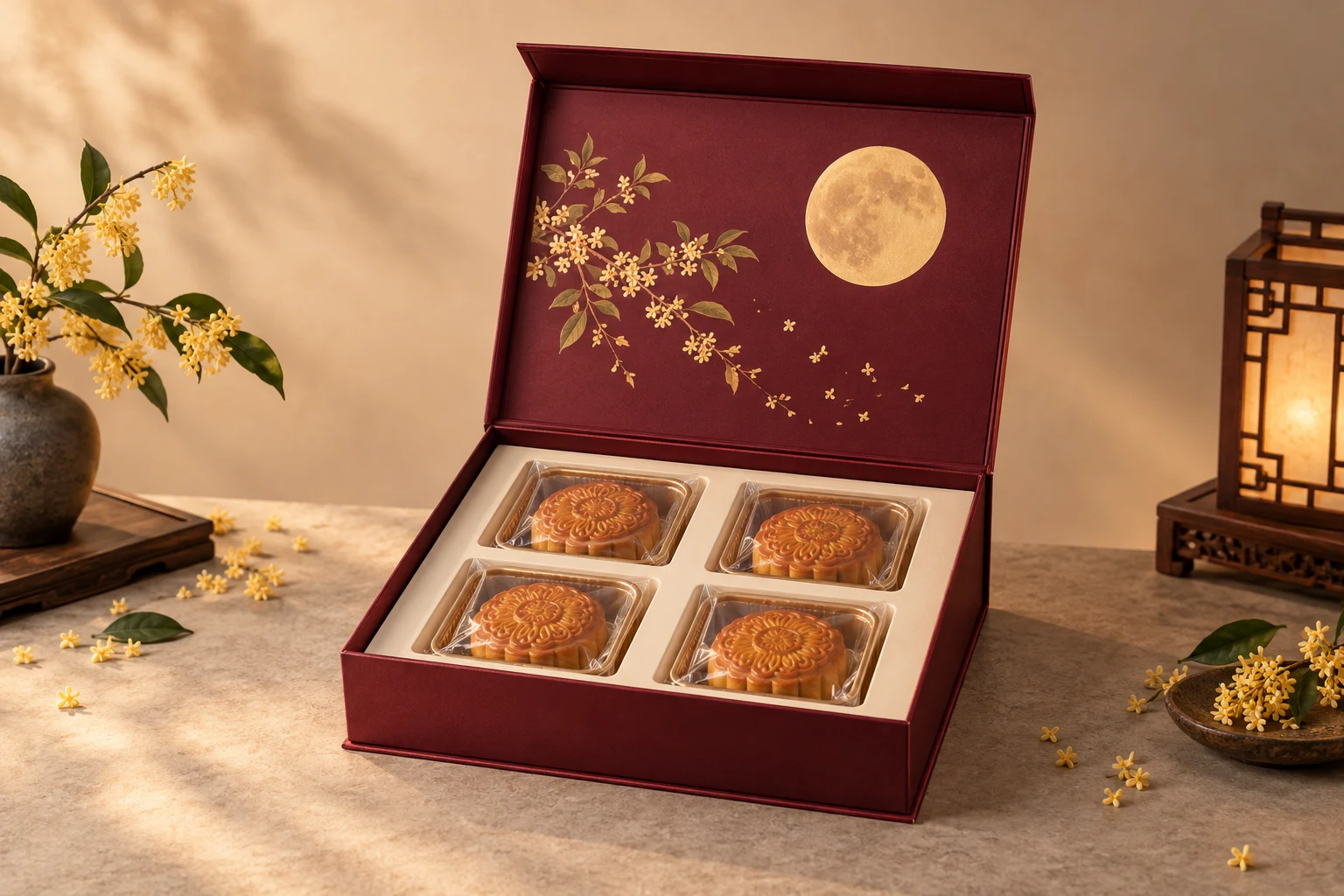
01 / BEYOND THE FIRST OPENING
“I'll keep the box” is a design brief.
Reddit discussions about mooncake packaging reveal two different experiences. Some recipients repurpose boxes for cards, cosmetics or small belongings. Others describe elaborate packaging as wasteful or awkward to use once the food is gone. Neither experience represents every buyer, but together they suggest a practical question: what, exactly, will this box do after gifting?
For a bakery, hotel or corporate gifting team, “premium” should not automatically mean more layers. A clean opening, a secure fit and a well-proportioned structure can carry the occasion without additional compartments that have no purpose. Treat reuse as a proposed function to verify, not an environmental claim to add to the artwork.
Choose one second use before drawing the insert.
A shallow drawer might organize stationery. A simple lid-and-base box might hold greeting cards. A magnetic box might keep small accessories together. Pick a plausible use and check real items against the empty interior; do not assume every recipient wants another organizer.
A removable insert is the tray or divider that positions the gift contents and can be taken out without tearing the outer box. Request a sample that demonstrates removal, including any pull tab, rather than relying on a rendering.
02 / THREE STRUCTURES, THREE TRADEOFFS
Match the opening to the occasion.
| Structure | Gifting experience | Potential second use | What to validate |
|---|---|---|---|
| Magnetic rigid box | A complete view of the assortment when the lid opens | Small keepsakes or accessories | Closure clearance, insert removal and usable internal dimensions |
| Drawer box | A pull-out reveal; separate areas can organize the collection | Desk storage if drawer size and movement suit it | Loaded drawer travel, pull attachment and stability when open |
| Lid-and-base box | Simple top access for sharing or presenting the contents | Cards or small household items | Lid fit, gripping access and the interior after removing the tray |
These are design possibilities, not tested performance claims. Multi-drawer construction and other custom variations require supplier confirmation.
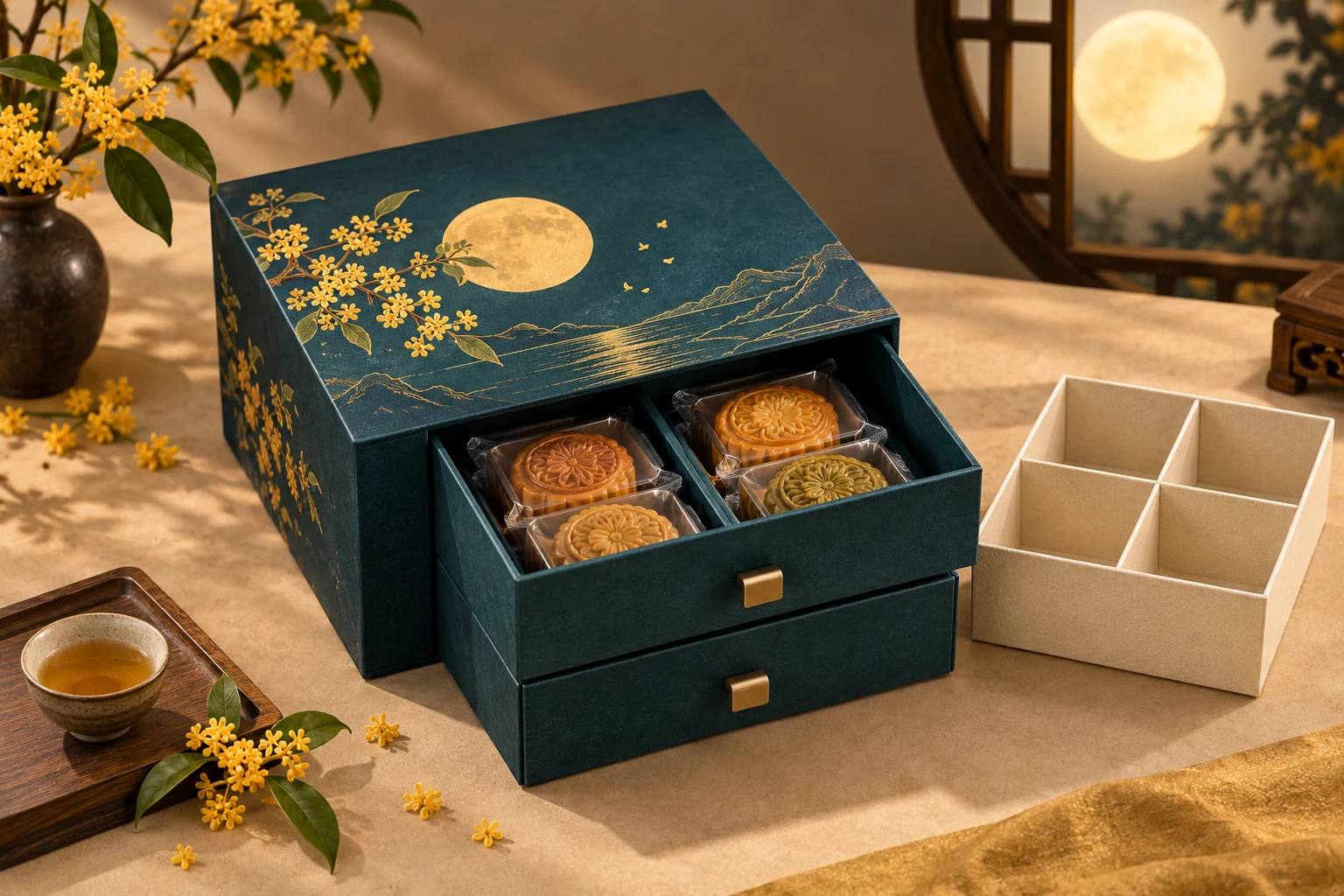
Make the seasonal detail intentional.
A full moon, an osmanthus branch or a restrained geometric motif can establish a Mid-Autumn theme without covering every surface. Choose one main visual, then leave the opening and product arrangement easy to understand. Request physical finish samples when metallic details or textured papers are important to the result.
If year-round use is part of the brief, put a dated campaign message or a recipient-specific greeting on a separate card or removable sleeve. Keep necessary product information accessible and accurate. A removable seasonal element may make later use easier, but it does not prove the packaging has a lower environmental impact.
For corporate orders, separate the permanent box artwork from the recipient message. This allows the team to review names and greeting versions without treating every message change as a structural redesign. Confirm the packing sequence so cards are matched to the right order.
03 / A SMALLER, COORDINATED COLLECTION
Mooncakes and tea,
with a place for each.
A mixed gift set is another direction for a brand brief: fewer individually packed mooncakes alongside sealed tea tins or pouches. The packaging task is not to make the assortment look bigger. It is to keep different products securely separated and simple to remove.
Measure the mooncake with its tray and wrapper in place, including protruding seals. Measure each closed tea container separately. Design support for the heavier item so it cannot press into the pastry pack. Confirm that the closed lid clears the tallest component.
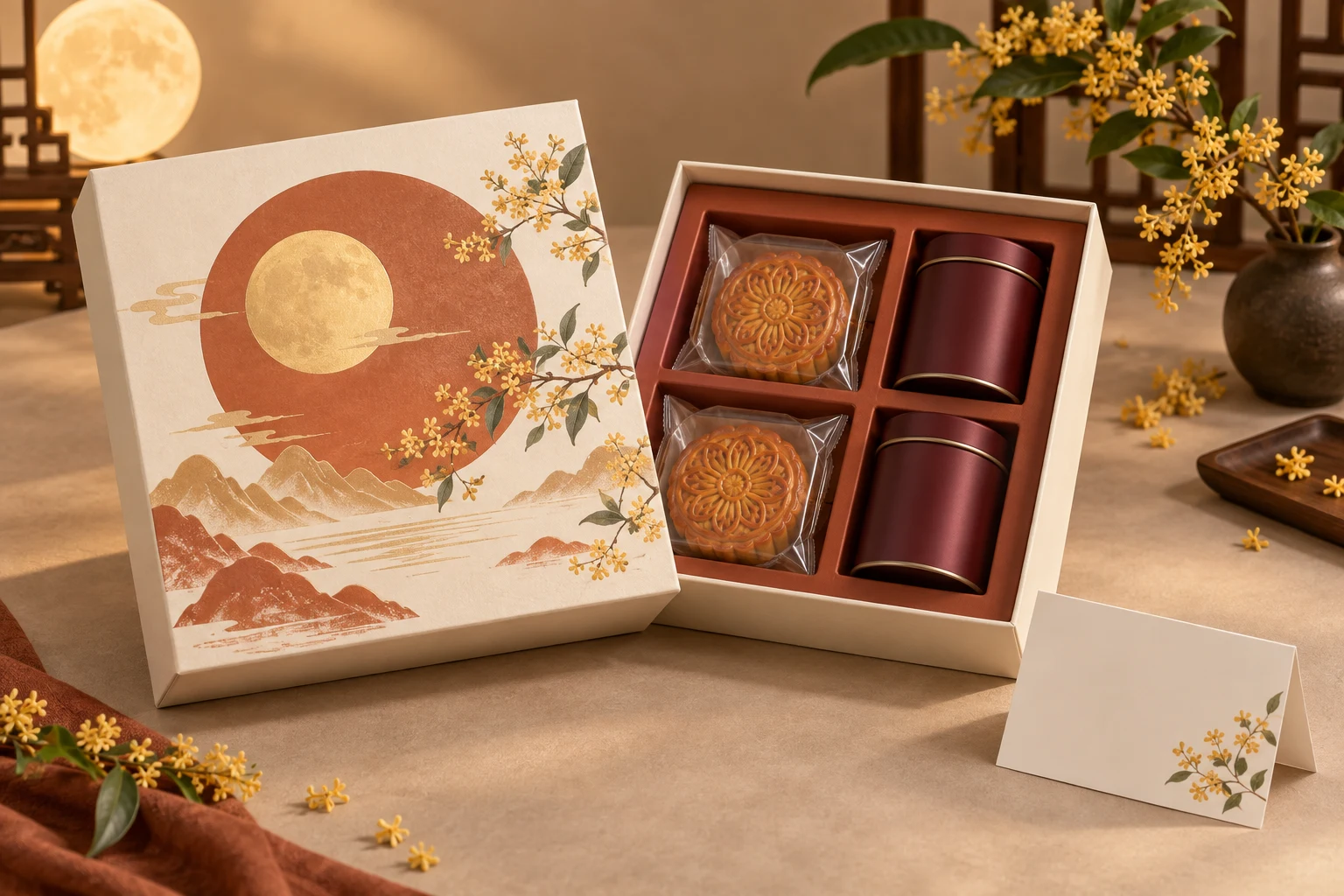
Keep flavor identities, food information and storage guidance connected to the primary packs. Do not make a decorative assortment card the only way to identify a product once it leaves the box. A paper gift box should not be described as insulated, airtight or suitable for chilled products without appropriate evidence.
Triya Gift's custom paper box range provides structural starting points for the presentation. Share your actual packed products and intended delivery method so the insert and outer box can be considered together. Our tea sampler packaging guide covers the tea-side measurements in more detail.
04 / THE EMPTY-BOX TEST
Check both lives of the sample.
Use the following proposed review method to document the gift presentation and its intended second use. It is not a standardized durability or transport test.
- Record the packed specification. Identify the mooncake and tea SKUs, wrapped dimensions, box size, insert revision and finished pack weight.
- Review gifting access. Load actual products. Check removal, visibility and closure without squeezing wrappers or catching seals. Photograph any contact points.
- Remove the insert. Record whether tools are needed, how long removal takes and whether adhesive or torn paper remains. Inspect several samples rather than just the best one.
- Try the proposed second use. Place the intended cards, stationery or accessories inside. Record usable dimensions, lid clearance and ease of opening. Use only a clean, dry, undamaged box for non-food storage.
- Agree a repeated-opening check. Set a cycle count and review criteria with the supplier. Record the actual count, sample quantity and any pull, hinge or drawer wear; do not claim a service life from an informal trial.
- Review the delivery system separately. Test the filled gift box together with its dispatch packaging under an agreed method appropriate to the route. An attractive empty sample does not validate parcel protection.
If the second use is awkward, simplify the brief. A compact, well-made presentation box is more honest than an elaborate “reusable” concept that nobody can use comfortably.
Plan from arrival, not just the festival date.
Set the date the gifts must reach the distribution point, then work back through dispatch, packing, inspection, production and sample approval with the supplier. Include recipient personalization and food-packing coordination where relevant. Do not treat a generic lead-time estimate as a confirmed delivery promise.
For an imminent event, ask what is genuinely available before approving custom artwork. A new structural design may not be feasible within the remaining time. Quantity, finish, sampling and transport must be confirmed for the actual order.
For a useful quote, send the packed product dimensions, assortment count, order quantity options, destination, required arrival date and intended second use. Ask for the box, removable insert, greeting card, tooling, samples and freight to be listed separately. This makes tradeoffs visible without inventing a universal MOQ or unit price.
BUYER QUESTIONS
Before you approve the design.
Is a drawer box automatically more reusable?
No. Useful size, clean insert removal, stable construction and easy drawer travel matter more than the format name. Try the specific second use on a physical sample.
Can a paper mooncake gift box hold unwrapped food?
This guide assumes separately packed food. Confirm direct-contact requirements with the responsible food and packaging suppliers; a decorative paper finish is not evidence of suitability.
Should we add tea or keep a mooncake-only assortment?
Choose based on the recipient and gifting brief. A mixed set needs separate retention for the different weights and shapes. It is not automatically better or cheaper.
Can Triya Gift customize the box and insert?
Explore our magnetic, drawer and lid-and-base formats, then share your specification through the quote form. Custom construction, materials, finish, availability and timing need confirmation before ordering.